

Rodents are one of the most disruptive and costly pest problems a London business can face, yet many facility managers still reach for a box of supermarket traps when the first signs appear. That instinct is understandable, but it rarely works. Commercial environments, from hotel kitchens to retail stockrooms, present conditions that allow rodent populations to grow quickly and quietly. This guide sets out the best practices for effective rodent control, covers the compliance obligations you need to understand, and explains why a professionally managed approach is the only reliable long-term solution for London’s hospitality, food, and retail sectors.
Table of Contents
- Why rodent control matters in commercial spaces
- Understanding your options: DIY, reactive, and preventive rodent control
- The role of integrated pest management (IPM) in business settings
- Choosing a competent rodent control provider
- Why prevention always wins: a London pest control expert’s view
- Commercial rodent control made simple: next steps for London businesses
- Frequently asked questions
Key Takeaways
| Point | Details |
|---|---|
| Prevention is best | Preventive IPM consistently delivers better rodent control in commercial settings than reactive or DIY methods. |
| Compliance is critical | Food businesses must have frequent inspections, and proper documentation keeps you protected. |
| Choose certified experts | Always select BPCA or NPTA certified providers for the safest, most effective and legally compliant service. |
| DIY has hidden costs | Improper application and lack of expertise make DIY attempts unreliable and potentially more costly in the long term. |
Why rodent control matters in commercial spaces
A rodent problem in a commercial property is never simply an inconvenience. Rats and mice gnaw through electrical cabling, insulation, and packaging, causing costly structural damage and creating genuine fire risks. They contaminate food stocks with droppings, urine, and fur, and they carry pathogens that pose a serious public health threat to both staff and customers.
For London businesses, the regulatory stakes are equally high. The Food Safety Act 1990 and associated hygiene regulations require food businesses to maintain safe, pest-free premises, and local authority environmental health officers conduct routine inspections with no prior warning. Food businesses require monthly pest control inspections, while lower-risk premises are expected to have quarterly checks. Falling short of these standards can trigger formal notices, fines, or forced closure.
The consequences extend well beyond a single inspection. A pest sighting reported on a review platform, or publicised through a council enforcement notice, can damage a brand’s reputation for years. Hotels, restaurants, and retail chains operating in London face particularly close scrutiny from both authorities and the public.
“A single unresolved rodent sighting can destroy years of hard-earned customer trust. In high-footfall commercial environments, there is simply no margin for a reactive-only approach.”
Meeting compliance standards requires more than luck. Businesses need robust, documented pest management programmes that satisfy auditors and inspectors alike. Our compliance guide outlines exactly what London businesses are expected to demonstrate during formal assessments.
Key risks to keep in mind:
- Stock contamination and financial loss from condemned goods
- Structural damage from gnawing and nesting activity
- Regulatory fines and potential closure orders
- Reputational damage via social media and review sites
- Legal liability if customers or staff are harmed
With the risks and business realities clearly outlined, it is important to understand the practical options available for controlling rodents at the commercial level.
Understanding your options: DIY, reactive, and preventive rodent control
Most facility managers have tried some form of DIY rodent control at some point. Snap traps, glue boards, and supermarket rodenticide sachets are easy to obtain. The problem is that DIY fails due to improper placement; professionals use bio-spotting, a technique that analyses rodent activity patterns to identify the precise locations where equipment will be most effective. Without this, traps placed in the wrong spots will simply go untouched.
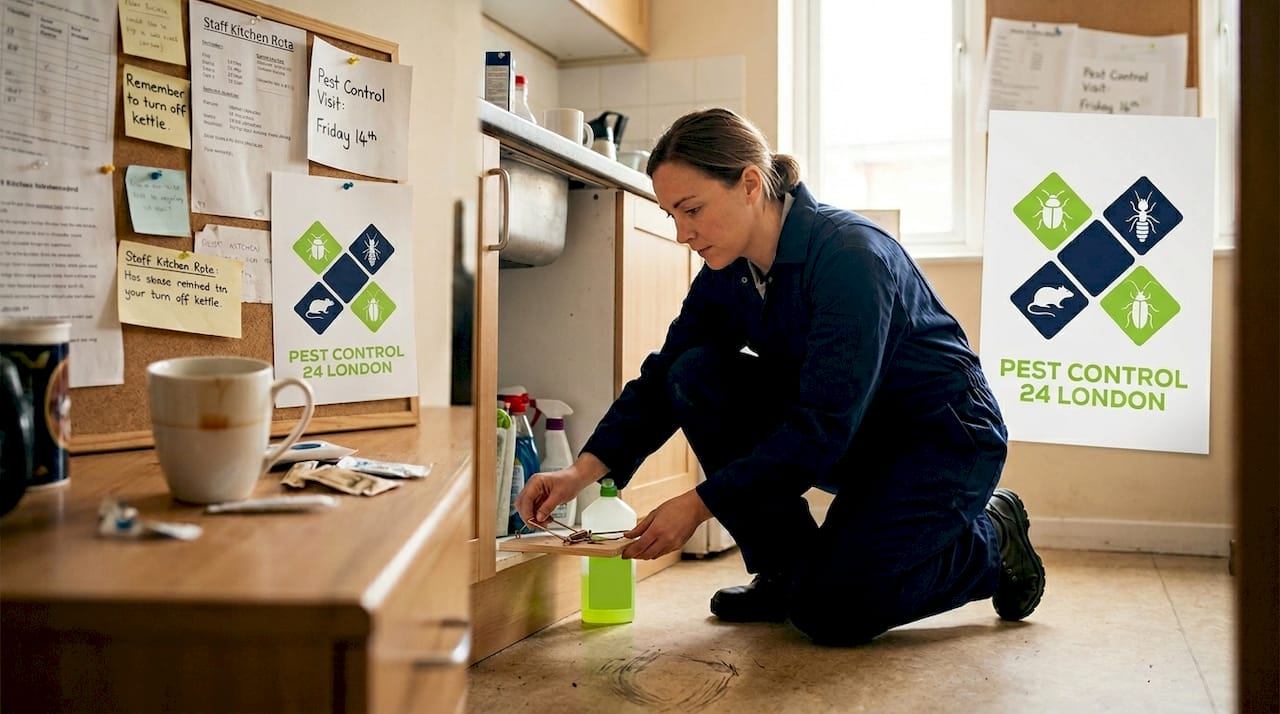
Reactive treatment, where a pest controller is called only when a sighting or complaint occurs, is a step up from DIY but still falls significantly short. Reactive programmes address the visible problem rather than its root cause, and preventive IPM outperforms reactive treatments by substantially reducing recurring infestations. After a reactive treatment, rodent populations often rebound within weeks if the entry points, food sources, and harbourage sites have not been addressed.
| Approach | Effectiveness | Compliance support | Cost over time |
|---|---|---|---|
| DIY | Low | None | High (recurring) |
| Reactive professional | Moderate | Limited | Moderate to high |
| Preventive IPM | High | Strong | Lower long-term |
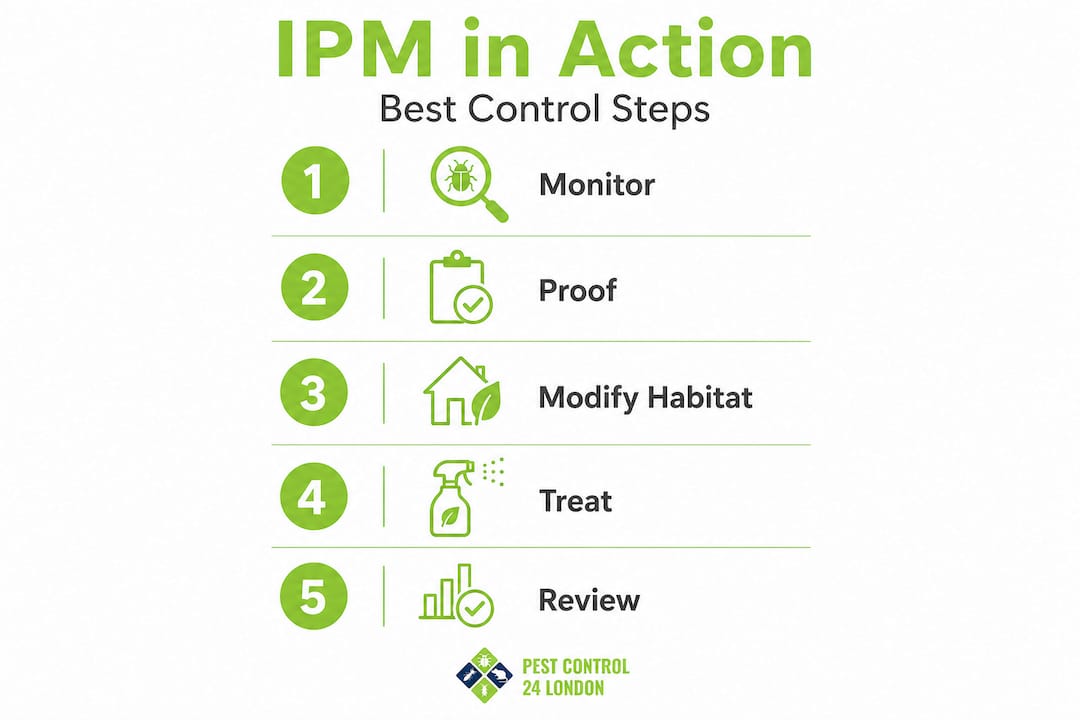
Preventive Integrated Pest Management (IPM) is the gold standard. It combines ongoing monitoring, proofing, habitat modification, and targeted treatments into a single, coordinated programme. Crucially, it produces the documentation that food businesses and hospitality operators need for regulatory audits.
Pro Tip: Ask any pest control provider whether they use bio-spotting when setting up monitoring equipment. If they cannot explain the technique, that is a sign they rely on guesswork rather than evidence-based placement.
Our detailed treatment guide covers the specific interventions used in London’s commercial settings, and our section on mice in commercial properties gives more targeted guidance for one of the city’s most common rodent problems.
Now that you understand why prevention-focused control is superior, it is vital to see how IPM actually works in practice.
The role of integrated pest management (IPM) in business settings
IPM is not a single treatment. It is a structured, ongoing process designed to manage pest pressure at its source rather than simply reacting to outbreaks. For commercial properties in London, it is the approach that best satisfies both operational needs and regulatory expectations.
A well-run IPM programme follows five clear stages:
- Assess: Carry out a thorough survey of the premises, identifying entry points, harbouring sites, food and water sources, and evidence of current activity such as droppings, grease marks, and gnaw damage.
- Act: Implement a combination of physical proofing, habitat modifications, and targeted treatment. Proofing may include sealing gaps around pipework, fitting door brushes, and installing rodent-proof drain covers.
- Monitor: Place monitoring stations at bio-spotted locations and check them on a regular, documented schedule. This tells you whether activity is increasing, decreasing, or stable.
- Document: Record every visit, every finding, and every action taken. This documentation is critical for passing local authority inspections and third-party food safety audits.
- Review: Analyse trends over time and adjust the programme as activity patterns change, seasons shift, or the premises undergo refurbishment.
One important consideration is the role of rodenticides within IPM. Some businesses assume that putting down bait is a sufficient standalone solution. However, rodenticide efficacy lacks strong empirical evidence in certain studies, and over-reliance on poison baits raises concerns around secondary poisoning of wildlife, resistance development, and sustainability. IPM treats rodenticides as one tool among many, using them only where other methods are insufficient.
Pro Tip: Seasonal adjustments matter enormously in London. Rodent activity typically increases in autumn as temperatures drop and foraging behaviour changes. A good IPM provider will proactively intensify monitoring and proofing in September and October, before infestations establish.
Businesses in the food and hospitality sector will find specific guidance in our restaurant pest strategies resource. Long-term protection is also best secured through pest control contracts, which ensure ongoing coverage rather than ad hoc responses.
Choosing a competent rodent control provider
Selecting the right pest control partner is as important as the treatment itself. Not all providers operate to the same standard, and the wrong choice can leave your business exposed both operationally and legally.
When evaluating providers, focus on the following criteria:
- Certification: Insist on BPCA (British Pest Control Association) or NPTA (National Pest Technicians Association) certification. Choose BPCA or NPTA certified providers for compliance with legal standards and access to professional-grade rodenticides not available to the public.
- Prevention focus: Avoid providers who offer only one-off treatments. Look for those who design ongoing, prevention-orientated programmes tailored to your type of premises.
- Documentation and reporting: Your provider should supply written reports after every visit, detailing findings, actions taken, and recommendations. This paperwork protects you during inspections.
- Audit support: The best providers understand food safety and hospitality audit requirements and can produce records in the format your auditors expect.
- Sector experience: A provider who has worked extensively with hotels, restaurants, and retail sites will understand your specific risks and pressures far better than a generalist.
For a full overview of what professional commercial pest control involves, visit our dedicated service page where we outline our approach and the sectors we serve across London.
Why prevention always wins: a London pest control expert’s view
After more than ten years working with businesses across London, including large hotel chains, busy restaurant groups, and high-street retailers, one lesson stands out clearly: the businesses that cut corners on pest control always pay more in the end. Not occasionally. Always.
We have seen facility managers try to manage rodent problems in-house with mixed results, only to call us after a council visit or a viral complaint on social media. By that point, the cost of emergency treatment, stock disposal, deep cleaning, and reputational repair far exceeds what a structured prevention programme would have cost over two or three years.
The uncomfortable truth about rodent control is that it is not glamorous, and it does not feel urgent until it is a crisis. That is precisely why so many businesses underinvest. Rodents are secretive animals. A population can be well established before the first visible sign appears, and by then, reactive treatment faces a much harder task.
IPM works because it changes the conditions that allow rodents to thrive, rather than simply removing individuals. Sealing entry points, eliminating harbouring sites, reducing food access, and maintaining ongoing surveillance creates an environment that is genuinely inhospitable to rodents. Our experience with pest control best practices reinforces this consistently. No bait alone achieves that. No snap trap alone achieves that. Only a structured, professionally managed programme does.
Compliance, too, is often misunderstood. Some businesses view pest control documentation as a box-ticking exercise, something to satisfy an inspector and then set aside. In reality, good documentation is a record of your commitment to protecting your customers, your staff, and your business. Environmental health officers and food safety auditors can read the difference between a genuine programme and a rushed file of paperwork. Investing in a credible, consistent programme signals professionalism and care.
Commercial rodent control made simple: next steps for London businesses
Protecting your business from rodents does not need to be complicated, but it does need to be professional.

We have been delivering evidence-based business pest management across London since 2015, working with hotels, restaurants, retailers, and hospitality groups of all sizes. Our BPCA-qualified technicians design IPM programmes that are tailored to your premises, support your compliance obligations, and provide rapid response when you need it most. Where an infestation has already taken hold, we also offer full disinfection after infestations to restore hygiene and safety to your site. Get in touch today to request a tailored assessment and take the first practical step towards lasting rodent control.
Frequently asked questions
How often must commercial premises in London be inspected for rodents?
Food businesses require monthly pest control inspections, while lower-risk premises are expected to have checks every quarter to maintain compliance.
Are rodenticides the best choice for getting rid of commercial rodents?
Not as a standalone measure. Rodenticide efficacy lacks strong empirical evidence in some studies, and IPM is widely preferred as a more sustainable and reliable long-term solution.
What certifications should a pest control company hold?
Choose BPCA or NPTA certified providers to ensure legal compliance, professional standards, and access to regulated rodenticide products.
Why do DIY rodent control methods often fail in businesses?
DIY fails due to improper placement of equipment, whereas professional technicians use bio-spotting to identify exactly where monitoring and treatment devices will have the greatest impact.