

A busy restaurant in central London receives an unannounced visit from an environmental health officer. Within minutes, a rodent infestation is discovered in the kitchen. The business is shut down on the spot. Lost revenue, reputational damage, and potential prosecution follow. This scenario is not rare. London’s commercial properties operate under strict pest control legislation, including the Prevention of Damage by Pests Act 1949, Food Safety Act 1990, Food Hygiene Regulations 2013, and EC 852/2004. Failing to meet these standards puts your licence, your staff, and your business on the line. This guide walks you through compliance, preparation, treatment, and verification so you stay protected.
Table of Contents
- Understand legal obligations and compliance in commercial pest control
- Preparing for commercial pest treatment: Tools, checks, and site readiness
- Executing effective pest treatments: Step-by-step for London businesses
- Verification, clean-up, and compliance documentation
- What most guides miss about commercial pest control in London
- Get professional support for commercial pest control in London
- Frequently asked questions
Key Takeaways
| Point | Details |
|---|---|
| Legal compliance is critical | Ignoring pest control laws can lead to fines, closure, or prosecution for London businesses. |
| Preparation prevents disruption | Thorough site checks, staff briefings, and compliant equipment minimise risk and ensure safe pest treatment. |
| Stepwise treatment ensures safety | Following a structured process and using certified chemicals allows for reliable results. |
| Documentation protects your business | Keeping HACCP and COSHH records proves compliance and supports inspections. |
| Proactive management is best | Ongoing pest control and regular audits prevent costly emergencies and support business continuity. |
Understand legal obligations and compliance in commercial pest control
Every commercial property in London has a legal duty to manage pest risk. Whether you run a hotel, a takeaway, or a retail shop, the law holds you responsible for maintaining pest-free premises. Understanding which regulations apply to you is the first step toward genuine compliance.
The Prevention of Damage by Pests Act 1949 requires occupiers and owners to keep properties free from rats and mice. The Food Safety Act 1990 places a duty on food businesses to ensure food is safe for consumption, and pest activity directly threatens that. The Food Hygiene Regulations 2013 and EC 852/2004 extend this obligation further, requiring formal food safety management systems.
HACCP (Hazard Analysis and Critical Control Points) is the internationally recognised system for identifying and controlling food safety risks, including pest contamination. COSHH (Control of Substances Hazardous to Health) governs the safe storage, use, and disposal of pest control chemicals on your premises.
Businesses operating without these systems in place risk serious consequences. Fines can reach tens of thousands of pounds. Local authorities have the power to issue improvement notices, prohibition orders, or pursue criminal prosecution. For food businesses, a single failed inspection can trigger a poor food hygiene rating, which is publicly visible and devastating for trade.
Here is how the key legislation compares across business types:
| Legislation | Applies to | Key requirement |
|---|---|---|
| Prevention of Damage by Pests Act 1949 | All commercial properties | Keep premises free from rodents |
| Food Safety Act 1990 | Food businesses | Ensure food safety, prevent contamination |
| Food Hygiene Regulations 2013 | Restaurants, hotels, takeaways | Implement documented food safety management |
| EC 852/2004 | All EU-aligned food operators | Follow hygiene rules across the supply chain |
| HACCP | Food businesses | Document hazard analysis and control points |
| COSHH | Any business using pest chemicals | Safe chemical use, storage, and disposal |
Your London pest compliance guide should document all pest-related incidents, treatments, and inspections. For food operators specifically, restaurant pest control compliance is not optional. It is audited and enforced regularly.
Key compliance actions for every commercial business:
- Keep written records of all pest sightings and reports
- Maintain contracts or evidence of professional pest control services
- Store and dispose of chemicals according to COSHH guidelines
- Update HACCP documents following any pest incident
- Train relevant staff on pest awareness and reporting procedures
With the legal context in mind, businesses must prepare thoroughly before launching any pest treatment programme.
Preparing for commercial pest treatment: Tools, checks, and site readiness
Proper preparation is what separates a controlled, compliant treatment from one that creates more problems than it solves. Before any chemicals are applied or traps are set, a structured approach to site readiness is essential.
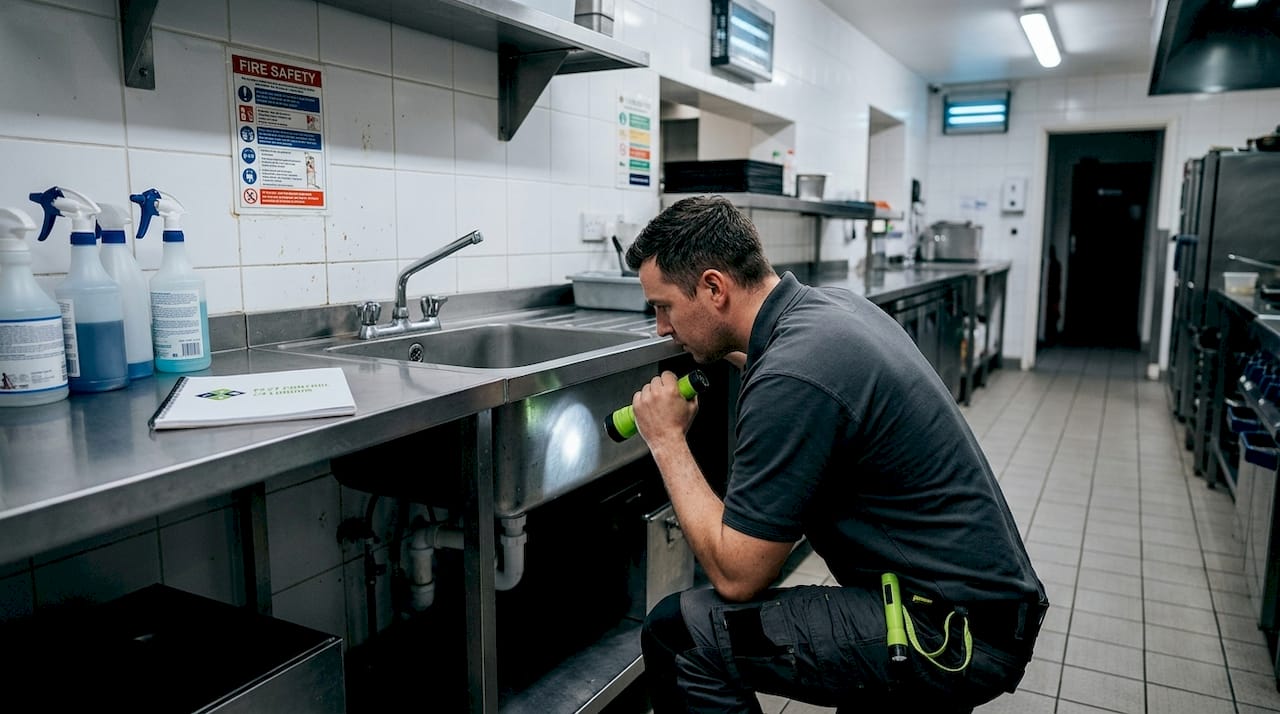
Begin with a thorough site inspection. Walk the entire premises, paying close attention to entry points such as gaps around pipework, damaged skirting boards, and poorly sealed doors. Identify signs of pest activity: droppings, gnawing marks, grease trails, larvae, or nesting materials. Note vulnerable areas including food storage rooms, waste areas, and service corridors.
Essential equipment and materials for a compliant commercial treatment include:
- Personal protective equipment (PPE): gloves, masks, and protective clothing for anyone handling chemicals
- COSHH-compliant pesticides: only products approved for commercial use and listed on the pesticide register
- Traps and monitoring stations: snap traps, glue boards, and electronic monitoring devices
- Physical barriers: proofing materials such as wire wool, door brush strips, and mesh
- Signage: clear warning signs for any areas undergoing treatment
- Inspection logs: pre-formatted sheets to record findings and actions
| Preparation step | Purpose | Who is responsible |
|---|---|---|
| Site inspection | Identify pest activity and risks | Pest controller or trained manager |
| PPE check | Ensure safe chemical handling | All treatment staff |
| Staff briefing | Communicate treatment plan and risks | Facility manager |
| HACCP review | Update hazard records before treatment | Food safety lead |
| Sanitation check | Remove food debris and clutter | Kitchen or cleaning team |
| Signage placement | Warn staff and public of treatment areas | Pest controller |
HACCP and COSHH compliance must be built into every stage of preparation, not bolted on afterwards. Your commercial pest control options will depend on the type of pest identified and the nature of your premises, so this preparation phase directly informs treatment choices.
Pro Tip: Schedule your site inspection during quiet hours, such as early morning, when pests are more likely to be active and visible. This gives you a more accurate picture of the scale of any infestation before treatment begins.
Once adequately prepared, your team can move on to the actual treatment process.
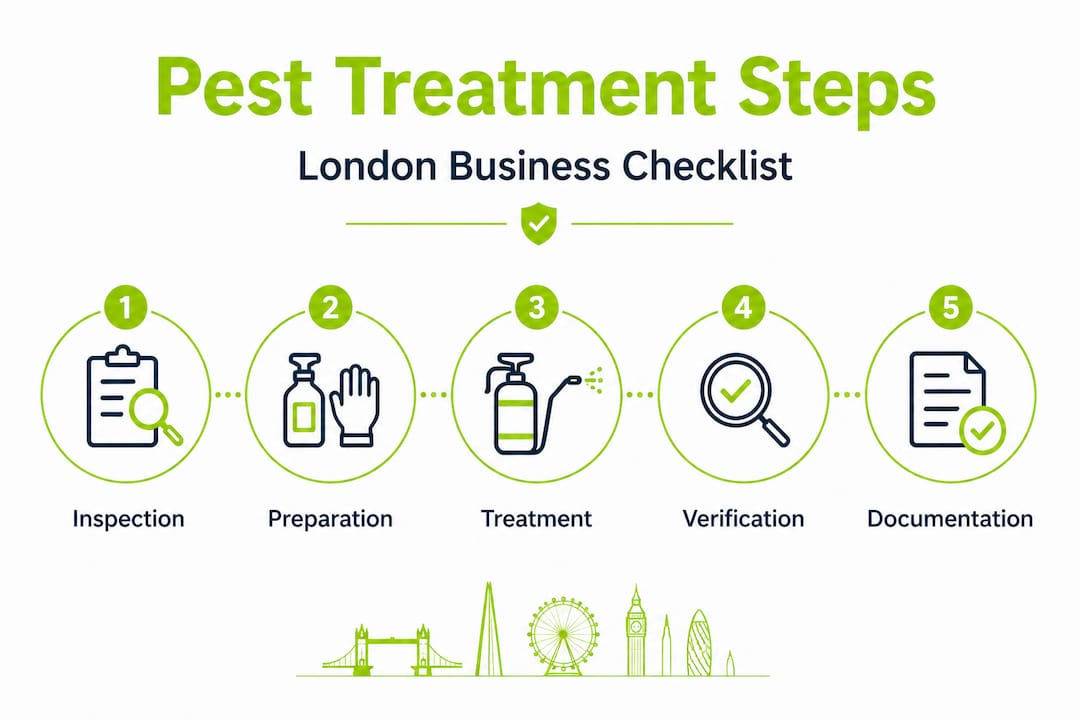
Executing effective pest treatments: Step-by-step for London businesses
Treatment execution must be precise, documented, and compliant with Food Hygiene Regulations 2013 and EC 852/2004. Follow these steps to carry out a lawful and effective commercial pest treatment.
- Confirm site readiness. Ensure all food is covered or removed, staff are briefed, and signage is in place before treatment begins.
- Apply targeted treatments. Use pest-specific methods: rodenticide bait stations for rats and mice, insecticide sprays or gels for cockroaches, fly control units for flying insects. Always apply chemicals at the lowest effective concentration.
- Seal entry points. Fit physical proofing materials to any gaps or cracks identified during the inspection. Treatment without proofing allows re-infestation within days.
- Set monitoring stations. Place bait stations, traps, and monitoring devices in high-risk areas. Label each station with a reference number matching your inspection log.
- Record every action. Note the product used, quantity applied, area treated, and the operative’s name and certification number. This is your COSHH and HACCP evidence.
- Schedule a follow-up visit. No single treatment guarantees complete eradication. A follow-up inspection within 7 to 14 days is standard practice.
Common mistakes that London businesses make during treatment include using non-approved chemicals purchased from general retail outlets, treating only visible pest activity without addressing the source, and failing to update HACCP records after the intervention. These errors can invalidate your compliance records and leave you exposed during an audit.
For urgent situations, emergency pest response is available around the clock to prevent closures. After any significant infestation, post-infestation disinfection is also recommended to eliminate residual contamination.
Pro Tip: Always use a BPCA-certified contractor. Their certification number provides documentary evidence that treatments were carried out by a qualified professional, which is invaluable during a food hygiene inspection.
After treatment, ensuring the success and compliance of your intervention is crucial.
Verification, clean-up, and compliance documentation
Treatment is only half the process. Verification and documentation close the loop and protect your business during future inspections or audits.
Post-treatment assessment should begin within 24 to 48 hours. Check monitoring stations and traps for activity. Reduced or absent pest activity indicates the treatment is working. Continued high activity warrants further investigation and a second treatment phase.
Key verification and clean-up steps:
- Deep clean all treated areas using products that meet COSHH standards, paying particular attention to surfaces near food preparation zones
- Remove and safely dispose of any dead pests, used bait, and contaminated materials according to local authority waste guidelines
- Inspect all monitoring stations and replenish bait or replace traps as needed
- Update your HACCP log with treatment outcomes, verification findings, and any corrective actions taken
- File all documentation including treatment certificates, inspection reports, and COSHH data sheets
Auditors from the Food Standards Agency or local environmental health departments will request these records without advance notice. A well-maintained compliance file can be the difference between a clean pass and a formal enforcement action.
Professional cleaning services following treatment ensure that contaminated surfaces are decontaminated to food-safe standards. Review commercial pest control tips for ongoing prevention strategies that reduce the risk of re-infestation.
| Compliance document | When to update | Retention period |
|---|---|---|
| HACCP hazard log | After every pest incident or treatment | Minimum 2 years |
| COSHH assessment | When new chemicals are introduced | Ongoing |
| Treatment certificates | After each professional treatment | Minimum 2 years |
| Inspection reports | After every site inspection | Minimum 2 years |
| Staff training records | After pest awareness training | Duration of employment |
These procedures set the foundation for long-term pest management and compliance, rather than short-term fixes.
What most guides miss about commercial pest control in London
After a decade working with London hotels, restaurants, and retail businesses, one pattern stands out clearly. Many operators treat pest control as an event rather than a process. They call in a contractor when something goes wrong, get a certificate, and consider the matter closed. This is where things unravel.
Pests do not respect treatment certificates. Rats adapt to bait, cockroaches find new harbourage points, and flies exploit any gap in sanitation. A reactive, one-off approach leaves businesses perpetually vulnerable. The operators who consistently pass inspections and maintain strong food hygiene ratings are those who have invested in 24/7 professional pest management programmes with scheduled monitoring, not just emergency callouts.
Documentation is another area that businesses underestimate until a crisis hits. We have seen businesses face significant fines not because their premises were infested, but because they could not produce adequate records showing what had been done and when. An auditor finding a gap in your HACCP log or a missing treatment certificate carries real consequences, even if your premises are currently clean.
The businesses that avoid costly disruption are those that treat compliance as a daily operational standard, not an annual review. Investing in regular audits, staff training, and professional monitoring now costs a fraction of what a closure or prosecution would.
Get professional support for commercial pest control in London
Running a commercial property in London means pest control is never truly optional. When it matters most, having the right support in place makes all the difference.

At Professional Pest Control Services, we have been helping London businesses maintain compliant, pest-free premises since 2015. Our BPCA-qualified team works with restaurants, hotels, shops, and takeaways across the city, providing scheduled monitoring, emergency response, and full compliance documentation. Whether you need London commercial pest control, professional cleaning services after an infestation, or specialist post-infestation sanitisation, our team is available around the clock. Contact us today to arrange a site assessment and get your compliance programme in order before your next inspection.
Frequently asked questions
What are the main UK legal requirements for commercial pest control?
London businesses must comply with the Prevention of Damage by Pests Act 1949, Food Safety Act 1990, Food Hygiene Regulations 2013, EC 852/2004, and ensure HACCP and COSHH procedures are followed. Failure to meet these obligations can result in fines, closure, or criminal prosecution.
What are common mistakes in commercial pest treatment?
Using non-compliant chemicals, skipping HACCP record-keeping, and neglecting follow-up monitoring are frequent errors that risk both legal consequences and re-infestation. Always use BPCA-certified contractors and document every stage of treatment.
How often should commercial premises in London be inspected for pests?
Businesses should conduct routine inspections at least monthly and immediately after any treatment to ensure early detection and ongoing compliance. High-risk environments such as restaurant kitchens may benefit from fortnightly monitoring.
Can commercial pest control be carried out during business hours?
Yes, with the correct precautions, appropriate signage, and COSHH-compliant procedures in place, but many London operators choose out-of-hours treatments to minimise disruption to staff and customers.
What documentation is needed after pest treatment?
Businesses must maintain HACCP and COSHH records, inspection logs, and treatment certificates for at least two years. These documents are essential during environmental health inspections and food hygiene audits.