

Commercial pest risk zones are specific areas within and around commercial properties where pest activity is most likely to occur, concentrate, or spread. Recognising these zones is not a theoretical exercise. It determines where you direct inspections, how you allocate resources, and whether your pest management programme holds up under regulatory scrutiny. For UK businesses, the stakes are clear: failure to manage identified risk zones can result in enforcement action under the Food Safety Act 1990, reputational damage, and operational disruption.
Key reasons why mapping these zones matters:
- They form the foundation of any credible pest risk assessment and integrated pest management plan
- They align inspection frequencies with actual risk levels rather than arbitrary schedules
- They satisfy audit requirements from bodies such as the British Pest Control Association (BPCA)
- They allow the Defra climate-pest risk web tool to be applied at site level for dynamic forecasting
- They protect your business from the compounding costs of reactive, post-infestation treatment
The approach throughout this guide follows UK industry norms, BPCA expertise, and current pest hotspot mapping methodology to give you a structured, practical framework for 2026.
Table of Contents
- How integrated pest management works in commercial properties
- How to conduct a pest risk assessment and map your risk zones
- Which pests pose the greatest risk in commercial settings?
- How pest risk zones differ across UK commercial sectors
- What UK regulations require from your pest control programme
- Inspection frequencies and monitoring protocols by risk zone
- How climate and urban density shape your pest risk zones
- Preventative measures specific to high-risk zones
- Developing a pest risk management plan for your commercial premises
- Pestcontrol24london: BPCA-qualified pest management for London businesses
- Key takeaways
How integrated pest management works in commercial properties
Integrated pest management (IPM) is the recognised framework for commercial pest management in the UK, combining inspection, identification, monitoring, targeted control, and evaluation into a continuous cycle. Its strength lies in prioritisation: rather than treating an entire building uniformly, IPM directs effort toward the zones where pest pressure is genuinely highest.
The connection between IPM and risk zone mapping is direct. Once you have classified areas of your premises as high, medium, or low risk, IPM protocols assign corresponding inspection frequencies, monitoring device placements, and control thresholds to each zone. This produces a programme that is both cost-efficient and audit-ready.
Core IPM components in a commercial context:
- Inspection: Systematic examination of all zones, with greater depth and frequency in high-risk areas
- Identification: Confirming pest species before selecting control methods, since rodent management differs fundamentally from stored product insect control
- Monitoring: Deploying traps, sensors, or bait stations calibrated to the risk level of each zone
- Control: Applying the least-disruptive effective method, prioritising physical and biological measures before chemical intervention
- Evaluation: Reviewing monitoring data to adjust zone classifications and control strategies over time
BPCA guidance consistently emphasises that a well-documented IPM programme, built around risk zone data, is the clearest demonstration of compliance during third-party audits. Reduced chemical use is a practical benefit, but the audit trail is often what matters most to food businesses and regulated sectors.
Pro Tip: Keep your IPM records zone-specific rather than site-wide. An auditor reviewing a food production facility wants to see that your kitchen loading bay is treated differently from your administrative offices, with documented justification for each.
How to conduct a pest risk assessment and map your risk zones
A structured pest risk assessment is the mechanism by which commercial pest risk zones are formally identified and classified. The process draws on observation, site history, stakeholder interviews, and monitoring data to produce a prioritised, actionable control plan.
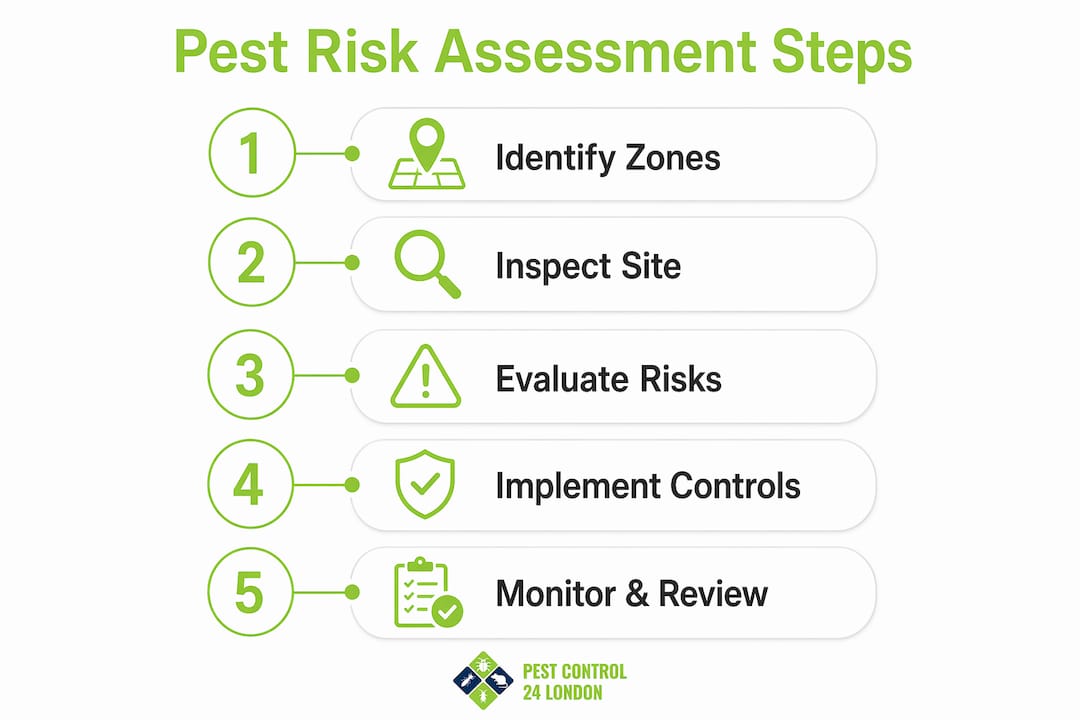
The standard methodology uses a risk matrix: likelihood of pest occurrence multiplied by consequence (regulatory impact, product contamination, structural damage) to assign each zone a high, medium, or low classification. This objective risk classification replaces subjective judgement and provides audit-ready justification for every decision you make about inspection frequency and control intensity.
Prioritisation steps for your risk assessment:
- Survey the entire site, including external perimeters, roof voids, drainage, and utility entries
- Record pest evidence: droppings, gnaw marks, grease trails, larvae, or live sightings
- Evaluate structural vulnerabilities: gaps around pipework, damaged seals, open drainage
- Interview staff about historical sightings and operational patterns that create pest-attractive conditions
- Score each zone using the likelihood × consequence matrix
- Classify zones and assign inspection frequencies accordingly
- Review classifications at least annually, or after any structural change or infestation event
For dynamic forecasting, the Defra and Met Office climate-pest risk web tool provides 1km-resolution estimates of climate-sensitive pest activity across UK sites, including emergence timing windows. This is particularly useful for properties with significant external risk zones, such as warehouses with large loading areas or hospitality venues with outdoor dining.
| Risk factor | Zone type | Typical classification |
|---|---|---|
| Food preparation and storage | Internal operational | High |
| Loading docks and delivery areas | External/transitional | High |
| Waste storage and compactor rooms | External/service | High |
| Staff canteens and break rooms | Internal support | Medium |
| Office and administrative areas | Internal low-activity | Low |
| Roof voids and structural cavities | Structural | Medium–High |
| External perimeter and landscaping | External | Medium |
Statistic callout: BPCA accreditation standards specify that food businesses classified as high risk typically require frequent monitoring, underscoring how zone classification directly determines your compliance obligations.
Which pests pose the greatest risk in commercial settings?
Understanding pest biology is inseparable from effective risk zoning. Different species exploit different resources and entry points, so a zone that is high risk for rodents may present a different profile for stored product insects or flying insects. BPCA experts recommend species-specific assessments precisely because generic pest plans frequently fail audits through lack of granular analysis.
Common commercial pests and their risk zone relevance:
- Rodents (rats and mice): Exploit structural entry points, drainage, and harbourage voids. High-risk zones include loading docks, waste areas, and wall cavities. Gnaw damage to wiring and packaging is a secondary hazard beyond contamination.
- Crawling insects (cockroaches, ants): Concentrate in warm, humid areas near food and water sources. Kitchen equipment voids, drainage channels, and service ducts are primary harbourage zones.
- Flying insects (flies, moths): Attracted to waste, food residues, and light sources. Waste compactor areas, delivery bays, and open food storage are the main risk zones.
- Stored product insects (grain weevils, flour beetles): Found in dry goods storage, milling areas, and anywhere bulk commodities are held. Infestations often begin in inbound packaging.
- Birds (pigeons, gulls, starlings): Risk zones are rooftops, ledges, loading canopies, and external dining areas. Fouling creates secondary contamination and slip hazards.
For a detailed breakdown of species behaviour relevant to your premises, the types of commercial pests guide covers entry points and activity patterns across all major pest categories.
Pro Tip: When mapping risk zones, record the specific pest species associated with each area rather than noting “pest activity” generically. Species-specific records allow you to select targeted monitoring devices and justify control choices to auditors.
How pest risk zones differ across UK commercial sectors
Sector matters enormously in pest risk management. The zones that demand the most attention in a hotel kitchen are not the same as those in a retail warehouse, and applying a uniform approach across different business types is one of the most common commercial pest control mistakes.

Hospitality (hotels, restaurants, catering): Food preparation areas, pot wash zones, and grease traps are consistently the highest-risk internal zones. High-risk food prep areas in hospitality experience more frequent and intense pest pressure than almost any other commercial environment. Shared food courts and densely occupied spaces increase cross-contamination risk further. External bin stores and delivery bays require equally rigorous attention.
Retail and food retail: Loading docks are a primary entry point, and most commercial infestations begin via hitchhiker pests in inbound delivery packaging. Immediate removal of cardboard and inspection of goods at the point of receipt are non-negotiable controls. Stockroom shelving bases and display unit voids are secondary harbourage zones.
Warehousing and logistics: Loading docks and external perimeters are consistently the highest-risk entry points in food warehouse settings. Structural gaps and high vehicle traffic exacerbate risk. Waste compactor rooms and dock door seals deserve focused inspection. Pest hotspot mapping, rather than site-wide treatment, is the approach that reduces costs and improves audit outcomes here.
Offices and commercial premises: Risk is generally lower but concentrated in staff kitchens, server rooms (warmth attracts rodents), and ground-floor utility entries. Inspection frequency can be reduced relative to food businesses, but monitoring should not be eliminated.
For sector-specific guidance on London hospitality properties, the restaurant pest control strategies resource covers zone-specific controls in detail.
What UK regulations require from your pest control programme
Regulatory compliance in the UK is not optional, and pest risk zone management sits at the centre of several overlapping obligations. The Food Safety Act 1990 places a duty on food business operators to prevent contamination, which courts have consistently interpreted to include pest prevention. The Food Standards Agency’s Safer Food, Better Business framework expects documented pest management as a standard component of food safety management.
Key compliance obligations for commercial properties:
- Maintain a written pest management plan that identifies risk zones and assigns control measures
- Keep records of all inspections, findings, and treatments, accessible for Environmental Health Officer visits
- Demonstrate that inspection frequencies are calibrated to risk zone classifications, not applied uniformly
- Use BPCA-accredited contractors where possible, as accreditation provides a recognised quality standard
- Review and update your pest management plan following any structural change, new infestation, or change in business operations
The consequences of non-compliance extend beyond fines. A single Environmental Health Officer visit resulting in an improvement notice can trigger a Food Hygiene Rating reduction, with immediate commercial impact. For hospitality businesses, a rating drop from five to three is publicly visible and directly affects customer confidence.
Aligning your risk zone classifications with the inspection frequencies your contractor uses is the clearest way to demonstrate that your programme is proportionate and evidence-based rather than arbitrary.
Inspection frequencies and monitoring protocols by risk zone
Inspection scheduling should follow directly from your risk zone classifications. Applying the same visit frequency to a food preparation area and an administrative office wastes resource and weakens the audit case for your high-risk zones.
Recommended monitoring protocols by zone:
- High-risk zones: Monthly inspection as a minimum; weekly monitoring device checks in food businesses; real-time sensor alerts where IoT technology is deployed
- Medium-risk zones: Quarterly inspections with monthly monitoring device checks; review frequency upward if activity is detected
- Low-risk zones: Bi-annual inspections; monitoring devices checked quarterly; immediate escalation if any pest evidence is found
Modern commercial buildings present a specific challenge. Core-shell structural voids, including double-wall insulation and raised floors, create harbourage and monitoring blind spots that monthly manual inspections cannot reliably reach. IoT sensor technologies enable real-time monitoring in these areas, flagging activity within hours rather than weeks. For properties where a 14–30 day infestation window between manual visits represents unacceptable risk, sensor-based monitoring is worth serious consideration.
Seasonal factors also affect scheduling. Rodent pressure typically increases in autumn as temperatures drop, making October and November the period when high-risk zone inspections should be intensified. Flying insect activity peaks in summer, requiring increased attention to waste areas and external zones from May through September.
Pro Tip: Document every monitoring device location on a site plan and record check results against each device individually. This level of granularity is what separates a defensible pest management record from a generic log that satisfies no auditor.
How climate and urban density shape your pest risk zones
Environmental factors outside your building influence which zones carry the highest risk and how that risk changes across the year. For UK commercial properties, two factors stand out: climate patterns and urban density.
The UK’s temperate climate means pest pressure is rarely static. Warmer, wetter winters have extended the active season for several pest species, including certain cockroach populations and cluster flies, pushing activity into months when many businesses reduce their monitoring frequency. The Defra climate-pest risk web tool allows site-level forecasting of these shifts, giving property managers advance warning of elevated risk windows rather than reacting after activity is detected.
Urban density compounds the challenge for London and other major UK cities. High building density means pest populations move readily between properties through shared drainage, utility corridors, and adjacent waste storage. A neighbouring property’s infestation can become your problem within days if your external perimeter zones are not adequately monitored and proofed. Dense urban environments also generate more food waste per square metre, sustaining larger rodent and fly populations than rural or suburban sites face.
The practical implication is that your risk zone classifications should be reviewed in light of both seasonal forecasts and changes in your immediate neighbourhood, not just internal operational factors.
Preventative measures specific to high-risk zones
Prevention in high-risk zones requires physical proofing, operational discipline, and monitoring working together. No single measure is sufficient on its own.
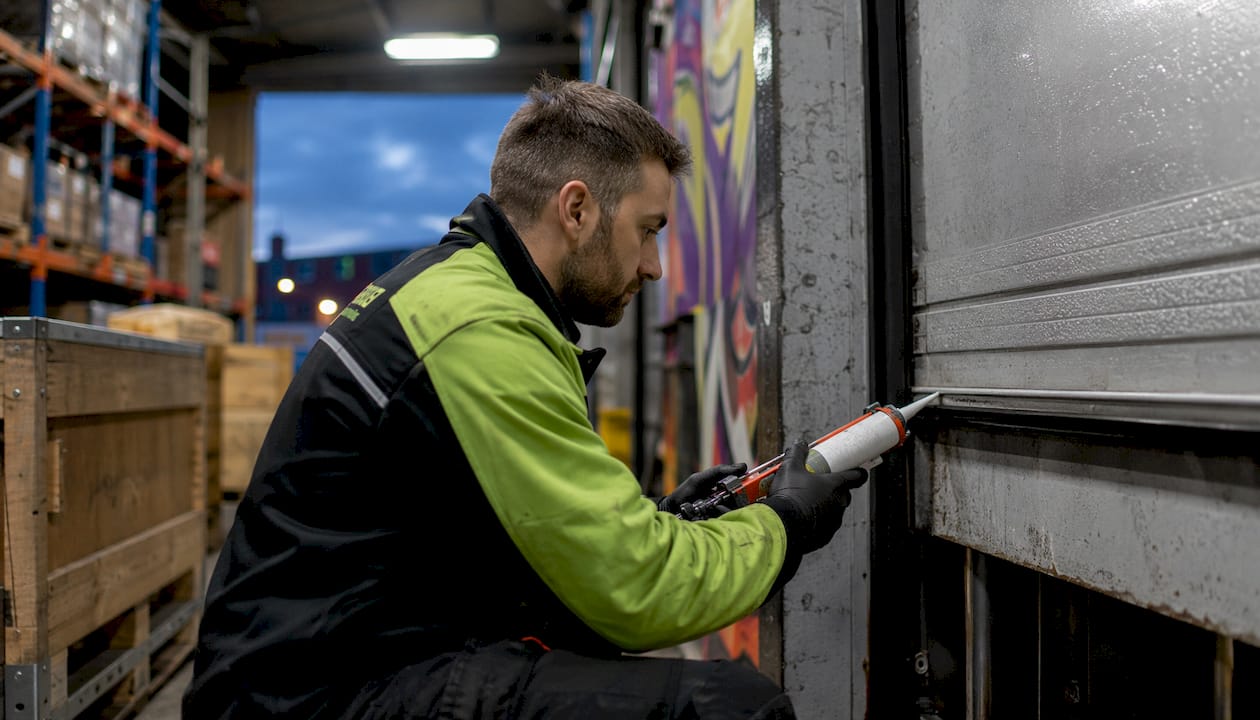
For loading docks and delivery areas, the priority is structural integrity and inbound goods management. Dock door seals should be inspected regularly for gaps; even a gap of 6mm is sufficient for a mouse to enter. All inbound deliveries should be inspected at the point of receipt, and cardboard packaging removed from the building promptly. Pest-proofing guidance for commercial kitchen entry points covers the specific sealing and inspection protocols that apply to high-throughput delivery zones.
For food preparation and storage areas, the focus shifts to eliminating harbourage and food sources. Equipment should be positioned to allow cleaning underneath and behind. Drainage channels must be kept clear and fitted with pest-resistant covers. Dry goods storage should use sealed containers, and stock rotation (first in, first out) should be enforced to prevent undisturbed harbourage in older stock.
For waste storage and compactor areas, the key controls are containment and frequency of removal. Bins should have close-fitting lids, be positioned away from building entry points where possible, and be cleaned regularly. Compactor rooms are among the highest-risk zones in any commercial building and warrant the most frequent inspection.
Structural exclusion across all high-risk zones, including sealing gaps around pipework, repairing damaged air bricks, and fitting brush strips to external doors, forms the baseline that all other controls depend on. For a facility manager’s perspective on structural exclusion in commercial properties, the principles apply directly to UK premises.
Developing a pest risk management plan for your commercial premises
A pest risk management plan is the document that ties everything together: risk zone classifications, inspection schedules, monitoring protocols, control measures, and review triggers. Without it, your pest control activity is a series of disconnected visits rather than a managed programme.
The plan should cover:
- Site description and zone map: A floor plan or site diagram with each zone classified by risk level, updated whenever the building layout changes
- Pest species of concern: Identified by zone, based on historical data and current monitoring
- Inspection schedule: Frequencies assigned by zone classification, with named responsible parties
- Monitoring device register: Location, type, and check frequency for every device on site
- Control methods and thresholds: The conditions under which each control measure is triggered, and who authorises it
- Documentation and record-keeping: How inspection reports, treatment records, and monitoring data are stored and made available for audit
- Review schedule: At minimum annually, and after any infestation event, structural change, or regulatory inspection
The plan should be a living document, not a one-time exercise. Continuous monitoring data should feed back into zone classifications, adjusting inspection frequencies as risk levels change. For guidance on maintaining a pest-free business through structured planning, the principles of regular review and documented evidence are consistent across all commercial sectors.
Pestcontrol24london: BPCA-qualified pest management for London businesses
Ten years of working across London’s hotels, restaurants, retail units, and commercial properties gives Pestcontrol24london a specific advantage: the team understands how risk zones behave differently in dense urban environments, where neighbouring premises and shared infrastructure raise the baseline pressure that every business faces.

Pestcontrol24london is BPCA fully qualified, which means every pest risk assessment, zone classification, and management plan produced meets the accreditation standards that UK auditors and Environmental Health Officers recognise. The service covers the full cycle: initial risk assessment and zone mapping, documented IPM programme development, scheduled inspections calibrated to your risk classifications, and treatment when it is needed. For businesses that need commercial pest control in London with the documentation to back it up, the starting point is a site assessment. Contact Pestcontrol24london to arrange yours and get a free quote.
Key takeaways
Identifying and managing commercial pest risk zones is the foundation of effective, compliant pest control in UK commercial properties, requiring structured assessment, zone-specific protocols, and documented evidence at every stage.
| Point | Details |
|---|---|
| Risk zone classification | Use a likelihood × consequence matrix to classify zones as high, medium, or low risk, replacing subjective judgement with audit-ready evidence. |
| Inspection frequency by zone | High-risk zones in food businesses require monthly or more frequent monitoring; low-risk zones can be inspected bi-annually with quarterly device checks. |
| Species-specific assessment | Generic pest plans fail audits; BPCA guidance requires species-specific analysis for each zone, distinguishing rodent from insect risk. |
| Technology in blind spots | IoT sensors address the 14–30 day infestation window that manual inspections miss in core-shell buildings with structural voids. |
| Pestcontrol24london | BPCA-qualified, London-based service providing risk zone assessments, documented IPM programmes, and scheduled inspections for commercial properties. |