

Cockroach control is defined as the systematic elimination of cockroach populations through sanitation, moisture management, structural exclusion, targeted treatments, and ongoing monitoring. The most effective cockroach control tips combine all five of these methods rather than relying on any single tactic. Strict sanitation alone reduces return rates by 72.3%, yet cockroaches can survive approximately 7 days without water, making moisture control equally critical. Pestcontrol24london has applied this integrated approach across thousands of London homes since 2015, consistently achieving results that isolated DIY methods cannot match.
1. How does sanitation reduce cockroach infestations?
Sanitation is the foundation of any effective pest management plan. Cockroaches depend on accessible food debris to sustain and grow their populations. Removing that food supply forces them to move on or die out.
Daily cleaning habits make a measurable difference:
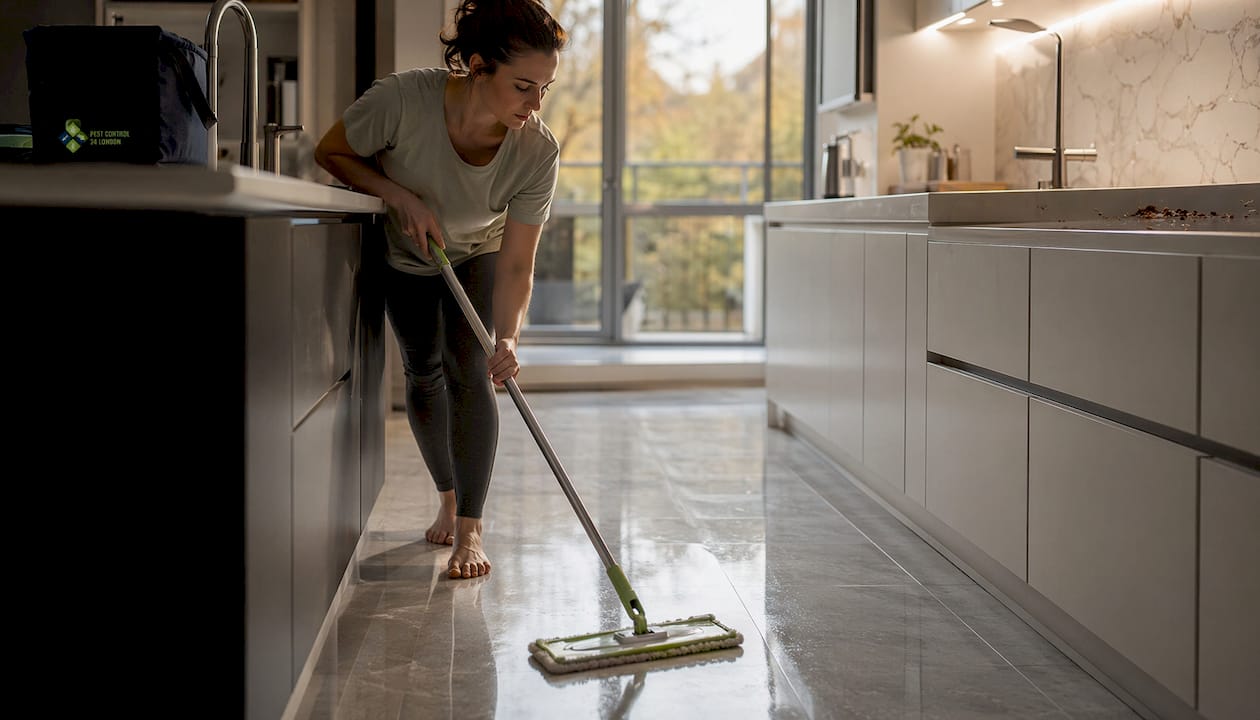
- Sweep and mop floors every day, not weekly
- Wipe down countertops and hob surfaces after every meal
- Store all food, including pet food, in airtight containers
- Clean pet bowls before bedtime
- Remove grease build-up behind appliances and inside cupboard hinges
The areas most homeowners miss are the ones cockroaches exploit most. Grease residue behind the cooker, crumbs beneath the fridge, and food particles inside bin liners all sustain populations between treatments. Professional pest control combined with sanitation can reduce infestations by 79.5% over six months. That figure reflects what consistent, thorough cleaning achieves alongside treatment.
Pro Tip: Vacuum kitchen floors daily rather than weekly. Even small crumb deposits feed a growing cockroach population between professional visits.
2. What role does moisture control play in prevention?
Moisture control is as important as food removal, yet most homeowners overlook it entirely. Cockroaches survive roughly 7 days without water but up to 15 days without food. Cut off their water supply and you accelerate population decline significantly.
Common moisture hotspots in residential properties include:
- Drip trays beneath fridges and freezers
- The space under kitchen and bathroom sinks
- Condensation on cold water pipes inside cabinets
- Overflow channels in baths and basins
- Damp areas behind washing machines
Fix dripping taps and leaking pipes immediately. Dry sinks and countertops each night before bed. Use a dehumidifier in basements, utility rooms, or any space that stays persistently damp. Proper moisture barrier installation beneath flooring also reduces the damp conditions cockroaches seek in ground-floor properties.
Pro Tip: Insulate cold water pipes inside kitchen and bathroom cabinets. This prevents condensation forming on pipe surfaces, removing a hidden water source cockroaches use overnight.
3. Why is structural exclusion critical for long-term control?
Exclusion means physically blocking the routes cockroaches use to enter and move through your home. Without it, even the best sanitation and treatment plan will face constant reinfestation from outside or from neighbouring units.
Cockroaches can enter through gaps as narrow as 1.6mm. That is roughly the thickness of a credit card. Common entry points include:
- Gaps around plumbing and electrical cables where they pass through walls
- Cracks along skirting boards and behind kitchen units
- Spaces beneath external doors without door sweeps
- Poorly fitted weatherstripping around door and window frames
- Shared wall voids in flats and terraced houses
Sealing cracks and gaps reduces cockroach infestation recurrence by 64.8%. Sealant and caulk deteriorate over time, so inspect and reseal annually. One often-overlooked harborage source is cardboard boxes. Cardboard harbours cockroaches and supplies starch-based glue as a food source. Replace cardboard storage boxes with sealed plastic bins wherever possible. For a detailed approach to proofing your home, the pest barriers homeowner’s guide covers the full process.
Pro Tip: Use silicone-based caulk rather than foam filler around plumbing entries. Cockroaches can chew through foam; silicone is far more durable.
4. What are the most effective targeted treatments?
Targeted treatments work by placing active products precisely where cockroaches live and feed, rather than applying broad sprays across open surfaces. Spraying causes roaches to scatter deeper into walls, making infestations harder to treat. Gel baits placed directly in cracks, crevices, and appliance edges are the professional standard.
Proper bait trap use lowers cockroach populations by 85.6% within two weeks. That result depends on correct placement and product rotation. Key treatment methods include:
- Gel baits: Apply in small dots inside cracks, behind appliances, and along harborage edges
- Boric acid dust: Use in inaccessible voids such as wall cavities and beneath flooring
- Insect growth regulators (IGRs): Disrupt the cockroach reproductive cycle, preventing larvae from reaching adulthood
- Sticky traps (glue boards): Place near walls and corners to monitor activity and confirm treatment progress
Bait aversion is a documented problem with repeated use of a single product. Cockroach populations can develop a preference to avoid a familiar bait, rendering it ineffective. Rotating active ingredients between treatments counters this resistance. Sticky traps placed near harborage areas also serve as monitoring tools, showing you exactly where activity is highest and whether populations are declining after treatment.
Pro Tip: Never place gel bait near insecticide sprays or cleaning products. Contamination destroys bait palatability and cockroaches will simply avoid it.
5. Why follow-up visits are non-negotiable
A single treatment rarely resolves a cockroach infestation completely. Cockroach egg cases (oothecae) are resistant to most surface treatments. Regular follow-up visits catch egg hatch-outs and missed harborage areas that the first treatment did not reach.
Follow-up is not optional. It is a core part of any professional pest management plan. Without it, a treated property can rebound to pre-treatment population levels within weeks as new nymphs emerge. An integrated approach combining inspection, monitoring, sanitation, exclusion, and follow-up defines successful long-term cockroach control. Homeowners who treat once and stop are the ones who call again three months later.
Key takeaways
Effective cockroach control requires sanitation, moisture elimination, structural exclusion, targeted baiting, and consistent follow-up working together as a single system.
| Point | Details |
|---|---|
| Sanitation is the foundation | Daily cleaning and airtight food storage reduce cockroach populations by removing their primary food supply. |
| Moisture control is equally critical | Cockroaches survive only 7 days without water; fixing leaks and drying surfaces removes a key survival resource. |
| Exclusion prevents reinfestation | Sealing gaps as small as 1.6mm and replacing cardboard with plastic bins cuts recurrence by 64.8%. |
| Targeted baiting outperforms sprays | Gel baits in cracks and crevices achieve over 85% population reduction; broad sprays scatter roaches deeper. |
| Follow-up is non-negotiable | Egg hatch-outs and missed harborage require return visits to prevent population rebound after initial treatment. |
What I have learned from treating cockroach infestations across London
After years of treating cockroach infestations in London homes, the pattern I see most often is this: homeowners reach for a spray, treat the surfaces they can see, and assume the problem is solved. It rarely is. Spraying visible cockroaches is the least effective thing you can do. It pushes the population deeper into wall voids and appliance cavities, where they are far harder to reach.
The properties I have seen recover fastest are the ones where the homeowner committed to all five pillars at once. Sanitation, moisture control, exclusion, targeted baiting, and monitoring. Remove one of those and the others work harder to compensate, with diminishing results.
The cardboard box issue surprises people every time. A stack of boxes in a utility room or under the stairs is not just clutter. It is a cockroach hotel with a built-in food source. Switching to sealed plastic bins is one of the simplest and most overlooked steps a homeowner can take.
I also want to be direct about pest control myths: the idea that one treatment fixes everything is the most damaging one. Egg cases survive the first round. Follow-up visits are where infestations are truly resolved, not just suppressed.
— Dan
Professional cockroach treatment from Pestcontrol24london
Cockroaches are persistent, and a thorough inspection is the only way to know what you are actually dealing with before any treatment begins.

Pestcontrol24london has been delivering professional cockroach removal across London since 2015. Every treatment plan is built around inspection findings, combining targeted gel baiting, IGRs, exclusion advice, and scheduled follow-up visits. The team is BPCA fully qualified and available 24/7. Free quotes are available for all residential and domestic pest control enquiries. Contact Pestcontrol24london today to arrange an inspection and get a plan that addresses the actual source of your infestation.
FAQ
What are the most effective cockroach control tips for homeowners?
The most effective approach combines daily sanitation, moisture elimination, structural exclusion, and targeted gel baiting. No single method achieves lasting control without the others working alongside it.
How do I know if I have a cockroach infestation?
Signs include dark droppings resembling ground pepper, a musty odour, grease smear marks along walls, and shed skins near harborage areas such as under sinks or behind appliances.
Why do cockroaches keep coming back after treatment?
Cockroach egg cases resist most surface treatments, so new nymphs hatch after the initial visit. Follow-up treatments are required to catch hatch-outs and any harborage areas missed in the first round.
Are natural cockroach repellents effective?
Natural repellents such as essential oils provide minimal and temporary deterrence. They do not eliminate established populations. Gel baiting and exclusion are the only methods with documented population reduction results.
When should I call a professional pest controller?
Call a professional when you see cockroaches during daylight hours, find multiple egg cases, or notice activity spreading beyond one room. Daytime sightings indicate a large population under pressure from overcrowding.