

Yes, a focused CCTV drain survey usually reveals the pipe defects that let rats travel from the sewer into your property, even when the camera never catches a rat on film. It is the right next step once you have seen recurring activity, scratching under floors, or droppings near drain covers. Book one from a BPCA qualified team before committing to remedial building work.
TL;DR:
- A CCTV drain survey for rats primarily detects structural pipe defects like cracks, displaced joints, and missing covers, which enable rodent movement.
- Visible signs such as fresh droppings, scratching noises, recurring blockages, ammonia odours, or recent groundworks strongly indicate rat activity in drains.
- The survey typically takes one to three hours, yields annotated footage and a detailed defect report, and guides targeted repair options like lining or capping.
- Proper interpretation involves combining drainage expertise with pest knowledge to locate actual entry points and plan effective, long-term solutions.
- Trusted contractors should provide full footage, defect locations, and clear recommendations, avoiding low-cost quotes lacking evidence or experience with rodent-specific drain issues.
Table of Contents
- What a CCTV drain survey for rats actually detects
- Signs that suggest rats are using your drains
- How the survey visit unfolds and how long it takes
- What happens after the survey: fixes and how permanent they are
- Typical costs and how to judge a quote
- Why professional interpretation of the footage matters
- Health and safety during the survey and any repairs
- Environmental and regulatory points to consider before repairs
- Choosing a CCTV drain survey contractor you can trust
- Why the “just catch it on camera” mindset gets this wrong
- Book a focused CCTV rat drain survey with Pestcontrol24london
- Sources
What a CCTV drain survey for rats actually detects
A drain camera survey works by feeding a waterproof, self-righting camera through your gulleys, manholes, and pipe runs, recording HD footage as it maps every junction and branch. The operator tracks the run against a plan of the property, noting where pipework changes direction, where joints sit, and where older sections meet newer ones.
Most useful findings have nothing to do with actually filming a rat. Rat infestation surveys typically turn up structural weaknesses that explain how rodents are moving between the public sewer and your building, which matters more than a single sighting on camera. A focused CCTV drain survey maps pipe integrity and commonly reveals defects that allow rats to travel from sewers into private drains.
Typical findings on a drain inspection for rats include:
- Cracked or fractured pipe sections, particularly on older clay or concrete runs
- Displaced or open joints where sections have shifted with ground movement
- Redundant branches left uncapped after a bathroom or kitchen was removed
- Missing or damaged interceptor caps at boundary chambers
- Root ingress that has widened a joint enough for rodents to pass through
- Gnaw marks, grease smears, or fresh droppings visible at pipe entry points
The main limitation is timing. A short inspection can miss intermittent activity if rats simply are not moving through that section of pipe on the day of the survey, which is why mapped defects carry more weight than the absence of a live sighting.
Signs that suggest rats are using your drains
Some warning signs point squarely at the drainage system rather than roof spaces, wall cavities, or garden burrows. Before booking a survey, check for these:
- Fresh droppings around gulley covers or manhole lids, especially after rain has disturbed the ground nearby.
- Scratching or movement noises under solid floors, particularly near where waste pipes run beneath the building.
- Recurrent blockages that clear temporarily after rodding but return within weeks, often a sign that debris or nesting material is being pulled into the pipe.
- An ammonia like odour rising from gulleys or internal drains, which can indicate a nest close to the surface of the system.
- Repeated infestations after treatment, where bait uptake and proofing above ground have not stopped fresh activity.
- Recent groundworks, extensions, or drainage alterations that may have left old branches unsealed.
Drains are less likely to be the culprit if you can point to an obvious above ground opening: a gap under a door, a hole in rendering, or a torn air brick cover. UK evidence from a 15 year systematic survey of commensal rodents in English dwellings links drainage faults with a measurably higher likelihood of rodent presence, which supports treating the drain run as a genuine suspect rather than a last resort.
How the survey visit unfolds and how long it takes
Preparation is straightforward. You will need to clear access to gulley covers and manhole lids, and if a run crosses into a neighbouring garden, arrange access in advance so the survey is not held up on the day.
On site, the engineer traces each accessible run, working from the property boundary back towards the building. Every junction gets noted, footage and still images are captured at points of interest, and any defect is annotated against its position in the network, often referenced to a manhole or invert level so remedial contractors can find it again without re surveying the whole system.
What you receive afterwards typically includes:
- A written report describing each defect and its likely relevance to rat ingress
- Annotated video footage timestamped to match the report
- Reference points such as manhole numbers or a simple plan sketch
- A clear next step recommendation, whether that is capping, lining, or a rat valve
Domestic surveys usually take between one and three hours, depending on how many inspection points the property has. Commercial sites with longer, more complex networks and multiple connections take longer, and the schedule often depends on how much of the run is genuinely accessible on the day.
What happens after the survey: fixes and how permanent they are
The right fix depends entirely on what the footage shows, which is why a written report with defect locations matters more than a verbal summary. Some issues are cheap and quick to resolve; others need proper remedial building work.
Common fixes, roughly in order of disruption:
- Removable stoppers or capping on redundant branches, often the fastest fix when an old bathroom or outbuilding connection has been left open.
- Replacing a missing or damaged interceptor cap at the boundary chamber, a common and inexpensive job.
- No dig lining for cracked or displaced sections, which resurfaces the pipe from inside without digging up the garden or drive.
- Local excavation and pipe replacement where a section has collapsed or shifted too far for lining to hold.
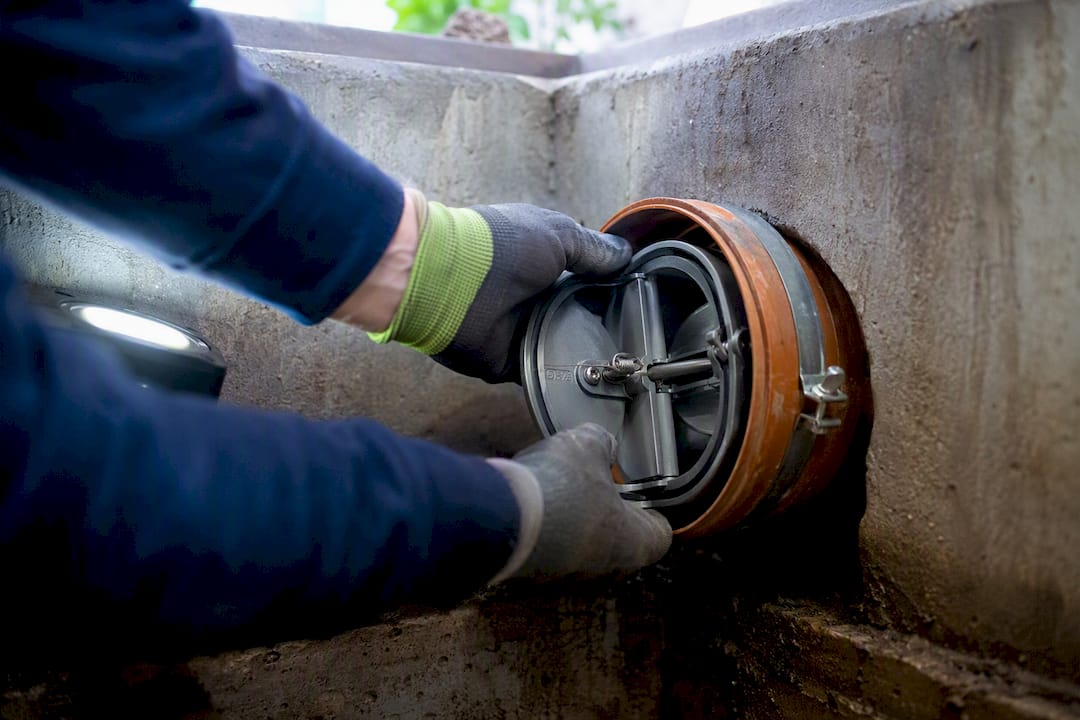
- Non-return valves, sometimes called rat gates, fitted at a specific point in the run to physically block rodent movement while still allowing waste to flow.
Rat gates are not a universal fix. Placement is everything: fit one in the wrong spot and rats simply find another route, or the valve interferes with normal drainage flow during heavy use. A rodent ingress specialist’s approach of mapping the whole network before recommending a valve location tends to find entry points that a narrower inspection misses.
Pro Tip: Never treat a capped branch or a new rat gate as the end of the job on its own. Pair the drainage repair with a targeted pest control visit above ground, because rats already inside a void or wall cavity will not leave just because their route back to the sewer has closed.
Typical costs and how to judge a quote
UK homeowners can generally expect a domestic CCTV rat drain survey to sit within a modest, defined price band, with the exact figure driven by property size, how many inspection points exist, and how easily the engineer can access each one. Larger properties, multiple gulleys, or a longer run to the boundary chamber all push the price up. Pestcontrol24london publishes a rat drain survey price range that reflects this typical UK domestic banding.
A genuinely useful quote should include:
- A full inspection of accessible drainage points, not just the nearest manhole
- Recorded footage you can actually view, not just a verbal summary
- A written, annotated report showing defect locations
- Recommended remedial options, with a separate quote for the physical repair work if it falls outside the survey itself
Watch for quotes that skip the footage or report entirely, prices that sit noticeably below everyone else with no explanation, or a contractor pushing immediate remedial work before showing you any evidence. Coordinated inspection followed by proper remediation has real backing: a large scale rat indexing programme that combined repeated inspections with enforcement and follow-up action cut properties showing active rat signs by 54% over three rounds, a strong argument for treating the survey as step one rather than the whole solution.
Why professional interpretation of the footage matters
Raw footage on its own tells you very little. The value comes from someone who understands rat behaviour reading that footage alongside a pest technician who knows the property’s history above ground.
Pestcontrol24london has worked across London properties since 2015, and that combination of drainage knowledge and rodent behaviour experience shapes how a report gets written and acted on. A BPCA qualified engineer and a pest technician typically work through the same footage together, matching each defect against where activity has actually been reported inside the building, then agreeing a remedial plan that addresses both the entry point and any existing infestation.
This joined-up approach tends to catch things a drainage only inspection would miss. One frequently overlooked example is an uncapped redundant branch hidden beneath raised flooring, an opening small enough to go unnoticed until someone is specifically looking for rat ingress rather than just structural faults.
What this collaborative process typically covers:
- Cross referencing defect locations against internal activity reports
- Deciding whether capping, lining, or a rat valve suits the specific defect
- Building a remedial plan that pairs drainage repair with pest treatment
- Drawing on case history from similar London properties to judge urgency
Health and safety during the survey and any repairs
Drain work carries real risks that go beyond the obvious mess, and any reputable contractor should be managing these as a matter of course rather than as an afterthought. Confined spaces, foul air, and biological contamination are the three main concerns on any rat related drain inspection.
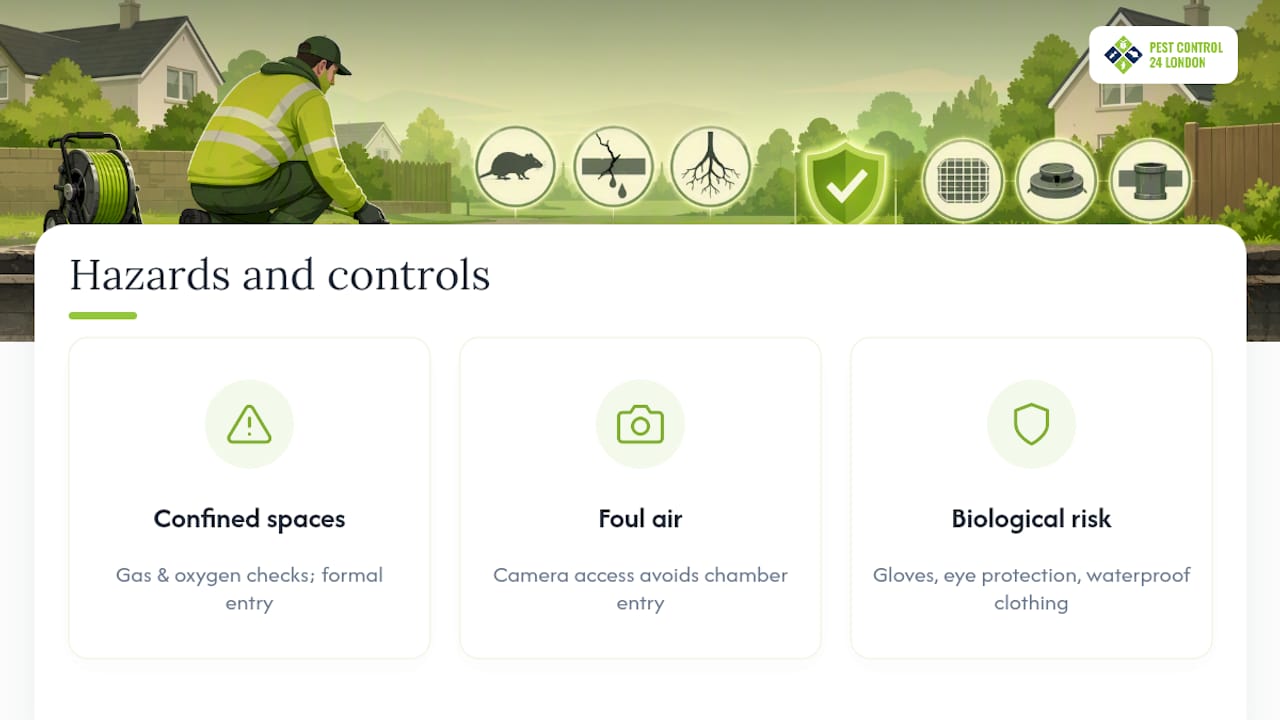
Sewage and drain water carry pathogens, including Leptospira bacteria associated with Weil’s disease, so engineers working on open manholes or contaminated pipework need proper personal protective equipment: gloves, eye protection, and waterproof clothing as a minimum. Anyone helping clear access to gulley covers at home should avoid direct contact with drain water or debris and wash their hands thoroughly afterwards.
Confined space entry is a specific hazard where a survey or repair requires physical entry into a chamber rather than just camera access. Deep manholes can present gas build up or oxygen depletion, which is why entry work follows formal confined space procedures rather than an engineer simply climbing down. For CCTV work itself, this rarely applies, since the camera does the work the engineer would otherwise need to enter for.
During remedial repairs, particularly excavation or lining work, there is the added risk of disturbing asbestos containing materials in older pipework, or hitting buried services. A competent contractor checks for these risks before starting rather than during. If rats are confirmed as active during the visit, standard precautions around droppings and nesting material also apply, since dried rodent waste can become airborne and poses its own respiratory risk if disturbed without care.
Environmental and regulatory points to consider before repairs
Drain repairs to exclude rats are not purely a plumbing decision. Several rules can affect what you are allowed to do and how.
Any work on the shared sewer connection, rather than your own private drain, may fall under the local water company’s responsibility or require their agreement before you touch it, since public sewers are typically not yours to alter. Building regulations also apply to significant drainage alterations, including changes to pipe runs, relining work in some cases, and any excavation near foundations, so check whether the scope of work needs sign off before it starts.
Non-return valves and rat gates need particular care from an environmental standpoint. A poorly placed or incorrectly sized valve can restrict normal drainage flow, increasing the risk of localised flooding or backing up waste during heavy rainfall, which then becomes its own environmental and health hazard. This is precisely why placement should follow a full network map rather than a guess at the nearest accessible chamber.
There are also wildlife considerations if drainage work disturbs nearby habitats, watercourses, or protected species, though this is more relevant to larger commercial or groundworks projects than a typical domestic repair. Waste from drain clearance, including sludge, debris, and any rodent remains, needs disposing of correctly rather than left on site, in line with standard waste handling practice. None of this should put you off getting the work done. It simply means the right contractor plans for it rather than treating it as someone else’s problem later.
Choosing a CCTV drain survey contractor you can trust
Not every contractor advertising a drain camera survey has genuine experience with rat ingress specifically, and that distinction matters more than price. A general drainage engineer can clear a blockage competently while missing the subtle signs that point to rodent activity.
Look for a contractor who holds BPCA affiliation or works alongside BPCA qualified technicians, since BPCA guidance on drainage inspections for rodents specifically recommends CCTV surveys as a way to gather photographic evidence that informs proofing measures, not just to unblock a pipe. That combination of drainage skill and pest knowledge is what separates a useful survey from a routine one.
Before booking, ask:
- Will I receive full footage and a written, annotated report, or just a verbal summary?
- Do you have specific experience with rat ingress cases, not only general blockages?
- Can you show examples of similar properties or defect types you have dealt with?
- Will the same team, or a linked pest technician, interpret the results and recommend a plan?
- Is the remedial quote separate from the survey fee, so I can compare it elsewhere if I choose?
A contractor who answers these clearly, without pushing you towards immediate work before showing evidence, is generally the safer choice. Vague answers about qualifications or a refusal to share footage are worth treating as a red flag.
Why the “just catch it on camera” mindset gets this wrong
The biggest misconception property owners bring to a CCTV rat drain survey is expecting to see an actual rat on screen before they will believe there is a drainage problem. That expectation sets the wrong bar. Rats do not perform on schedule, and a clean recording on the day proves nothing about what moved through that pipe the night before or the week after.
What the evidence actually supports is treating the defect map, not the sighting, as the real result. A cracked joint, an uncapped branch, or a missing interceptor cap is proof enough that rats have a route, regardless of whether one happened to walk past the lens. Conventional advice online tends to frame the survey as a detection exercise, when it is really a structural audit with pest implications.
If there is one thing worth prioritising above all else, it is insisting on the written report and annotated footage before agreeing to any remedial work. That single document is what lets you judge whether a quote for lining, capping, or a rat gate actually matches what was found, rather than taking a contractor’s word for it. Treat the camera as a mapping tool, not a trap, and the rest of the decision making gets considerably easier.
— Dan
Book a focused CCTV rat drain survey with Pestcontrol24london
Some pest control companies offer a BPCA qualified team that reads the footage with rat behaviour in mind, not just pipe condition. That distinction is the difference between a report that tells you a joint is displaced and one that tells you whether that displaced joint is actually your rat problem.

A booking includes the drain inspection itself, full annotated footage, a written report with defect locations, and a recommended remedial plan, whether that means capping, lining, or a properly placed rat valve. Using a company that handles both drainage evidence and pest treatment can help avoid the need to coordinate two separate contractors who have not shared their findings.
Before the visit, have gulley covers and manhole access clear, and flag any recent groundworks or known drainage history. From there, the next step is simple: get in touch through the main contact page to arrange a survey date and receive a written quote before any work begins.
Sources
- CDC report on rat indexing and neighbourhood inspections
- Results of a 15‑year systematic survey of commensal rodents in English dwellings