

For most UK homeowners and property managers, the right answer is neither biological nor chemical alone: Integrated Pest Management (IPM), which combines both under a structured framework, is the approach endorsed by the Health and Safety Executive (HSE), DEFRA, and the British Pest Control Association (BPCA). Pestcontrol24london has applied this framework across London since 2015, serving everything from residential flats to large commercial kitchens.
The core difference is straightforward. Biological control uses living organisms or naturally derived agents — predators, parasitoids, nematodes, microbial pathogens, pheromones — to suppress pest populations. Chemical control uses synthetic compounds designed for rapid, broad-spectrum or targeted knockdown. Biological methods tend to be slower and more environment-sensitive; chemical methods act within hours but carry residue and resistance risks.
When to choose each approach:
- Chemical control first: acute infestations, public-health pests (rats, cockroaches), or situations where rapid knockdown is non-negotiable.
- Biological control first: greenhouse crops, garden pest suppression, long-term prevention, or where chemical use is restricted.
- IPM (both together): the recommended default for most persistent or recurring problems, where selective chemical use is timed to protect natural enemies and biological measures sustain suppression between treatments.
The sections below cover how each method works, the agent types available in the UK, a side-by-side comparison, practical IPM steps, and clear guidance on when to call a qualified professional.
Table of Contents
- What biological pest control is and how it works
- Types of biological control agents relevant to the UK
- How chemical pest control works and what you need to know
- Biological vs chemical pest control: a side-by-side comparison
- Advantages and disadvantages of each approach
- How to combine both methods under Integrated Pest Management
- UK-specific practical considerations for homeowners and businesses
- How licensed UK professionals apply biological and chemical methods
- Key takeaways
- Why the “biological is always safer” assumption gets professionals into trouble
- Pestcontrol24london: professional IPM for London homes and businesses
- Authoritative sources and further reading
What biological pest control is and how it works
Biological control is the deliberate use of living natural enemies, microbial agents, or naturally derived biochemicals to reduce pest populations to levels below an economic or nuisance threshold. The goal is suppression and stability, not instant eradication.
In practice, biological control operates through several mechanisms: predation (a ladybird consuming aphids), parasitism (a parasitoid wasp laying eggs inside a caterpillar host), disease (a fungal pathogen infecting a beetle larva), competition (beneficial microbes outcompeting plant pathogens), and behaviour modification (pheromones disrupting mating). Each mechanism targets a specific vulnerability in the pest’s biology.
Biological control is best understood as population management, not extermination. The aim is to bring pest numbers below a threshold where they cause unacceptable damage, and to hold them there through ongoing ecological pressure rather than a single decisive strike.
There are three broad strategic approaches:
- Conservation: protecting and enhancing natural enemies already present in the environment (e.g. avoiding broad-spectrum sprays during flowering, planting nectar strips).
- Classical (importation): introducing a natural enemy from the pest’s region of origin and establishing a self-sustaining population. This is a long-term, research-intensive strategy used primarily for invasive pests.
- Augmentation: releasing mass-reared natural enemies either inundatively (high-volume, pesticide-style knockdown) or inoculatively (seasonal releases that establish a temporary population). This is the most commercially accessible route for UK growers and some domestic situations.
Biopesticides — including microbial products and biochemical pesticides — are registered differently from conventional synthetic pesticides. They generally require less data to register and decompose quickly, reducing residue risk. In the UK, macrobials (predators and parasitoids) are often treated as beneficial organisms rather than pesticides, while microbial products require formal regulatory approval. Always verify the domestic regulatory status of any biological agent before release or purchase.
Types of biological control agents relevant to the UK
Understanding the agent categories helps you recognise what a professional might recommend and why certain options suit specific pests or settings.
Macrobials: predators and parasitoids
Predatory insects and mites are the most visible biological agents. Ladybirds and lacewings target aphid colonies in gardens and greenhouses. Predatory mites such as Phytoseiulus persimilis are widely used against two-spotted spider mite in protected crops. Parasitoid wasps, including Trichogramma species and braconids, lay eggs inside or on host insects; the larvae consume the host from within, making them highly effective against caterpillars and whitefly.
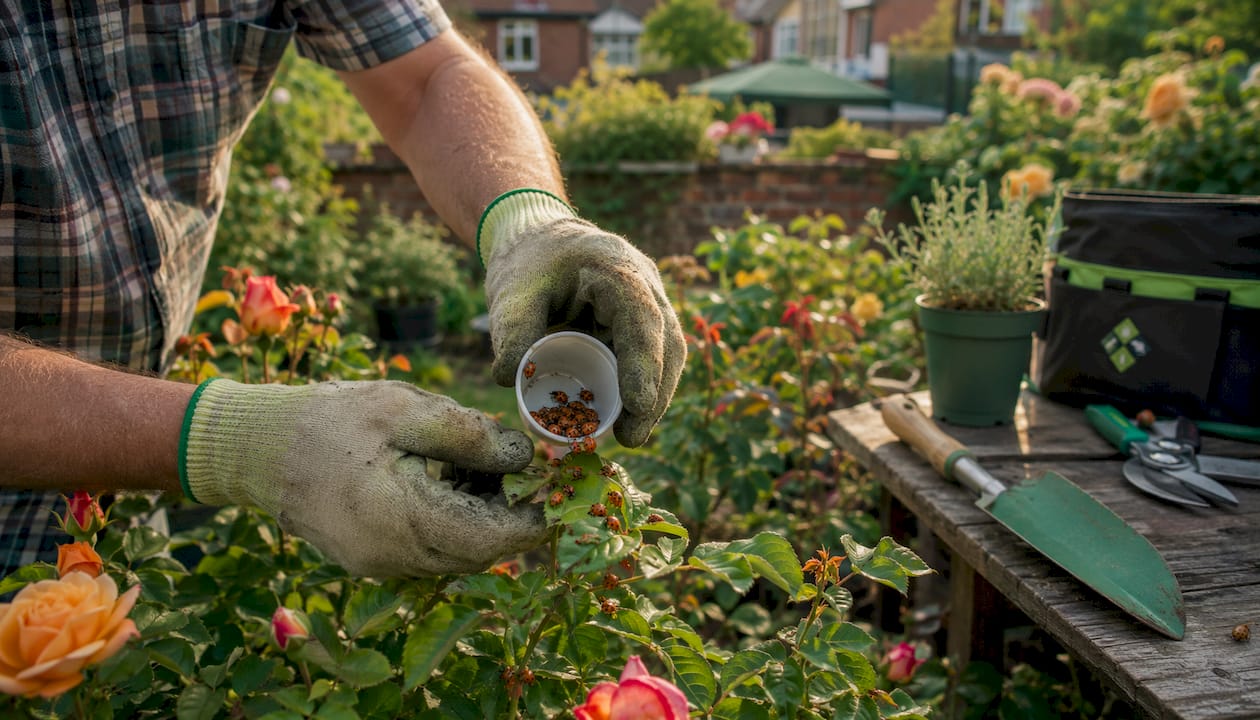
Seasonal inoculative release of parasitoids and predators has been a well-established strategy in European greenhouse production for decades, originally built around Encarsia formosa against greenhouse whitefly. Costs for biological control in European greenhouse settings have fallen substantially as the range of commercially available agents has expanded.
Microbials: bacteria, fungi, and viruses
Bacillus thuringiensis (Bt) is the most widely used microbial insecticide. Different strains target caterpillars, beetle larvae, or mosquito larvae by producing proteins that paralyse the gut. Entomopathogenic fungi such as Beauveria bassiana and Metarhizium anisopliae infect insects on contact and are used against soil pests, thrips, and whitefly. These products are applied like conventional sprays but act more slowly, typically over several days.
Beneficial nematodes
Entomopathogenic nematodes are microscopic roundworms applied to soil to target grubs, vine weevil larvae, leatherjackets, and other soil-dwelling pests. They enter the host, release symbiotic bacteria that kill it, and reproduce inside the cadaver. Nematodes are highly susceptible to desiccation and UV light, and perform best within a moderate temperature and moisture range. In the UK, this means spring and autumn applications are generally more reliable than midsummer treatments on dry soils.
Pro Tip: Water the application area thoroughly before and after nematode release, and apply in the early morning or evening to minimise UV exposure and moisture loss.
Biochemicals: pheromones and plant extracts
Pheromone traps and mating disruption dispensers do not kill pests directly; they monitor population levels or prevent mating, reducing the next generation. They are particularly useful for moths in stored products and some orchard pests. Plant-derived compounds such as pyrethrin (derived from chrysanthemum) and azadirachtin (from neem) act as contact insecticides or feeding deterrents with relatively short environmental persistence.
Conservation measures
Habitat strips planted with umbellifers, phacelia, and other nectar-rich species support hoverflies, parasitoid wasps, and ground beetles. Planting nectar-producing borders has been shown to support parasitoids and contribute to reductions in insecticide use in case studies. In UK gardens and commercial sites, even a modest wildflower margin can meaningfully increase natural enemy populations.
A caution on introduced agents
Not every biological agent is risk-free. Hyperparasitoids — parasitoids that attack other parasitoids — can undermine classical or augmentative releases. Introduced agents may also affect non-target native species. Professional identification and quarantine checks before release are standard practice among experienced pest managers, and skipping them is one of the most common causes of programme failure.
How chemical pest control works and what you need to know
Chemical pest control uses synthetic compounds formulated to kill, repel, or disrupt pest biology. Most act through one of several modes: neurotoxicity (organophosphates, pyrethroids, neonicotinoids), growth regulation (insect growth regulators that prevent moulting or reproduction), or physical disruption (desiccant dusts that damage the insect cuticle).
Common application types and their typical uses:
- Sprays (residual and contact): the most common format for insects; applied to surfaces pests travel across or directly onto infestations.
- Baits: used for rodents, cockroaches, and ants; slow-acting to allow bait to be shared within a colony or returned to a nest.
- Dusts: applied into voids, wall cavities, and roof spaces where sprays are impractical; long-lasting in dry conditions.
- Fumigants: used for severe or inaccessible infestations (stored product pests, some structural treatments); require professional licensing.
- Gels: targeted application for cockroaches and other harbourage pests in food environments.
The speed and predictability of chemical control are its clearest advantages. A residual spray can reduce an active rodent or insect population within hours to days, with minimal labour once applied. For acute public-health infestations, this speed is often non-negotiable.
In the UK, pesticide approvals are managed by the Health and Safety Executive’s Chemicals Regulation Division (CRD) under DEFRA oversight. Products must be approved under the UK plant protection products or biocidal products frameworks before use. Label obligations are legally binding: using a product off-label, at the wrong rate, or without the specified personal protective equipment (PPE) is a regulatory offence. Synthetic pyrethroids are among the most toxic chemical classes to beneficial insects, while insect growth regulators and Bt-based products are among the least disruptive to natural enemies.
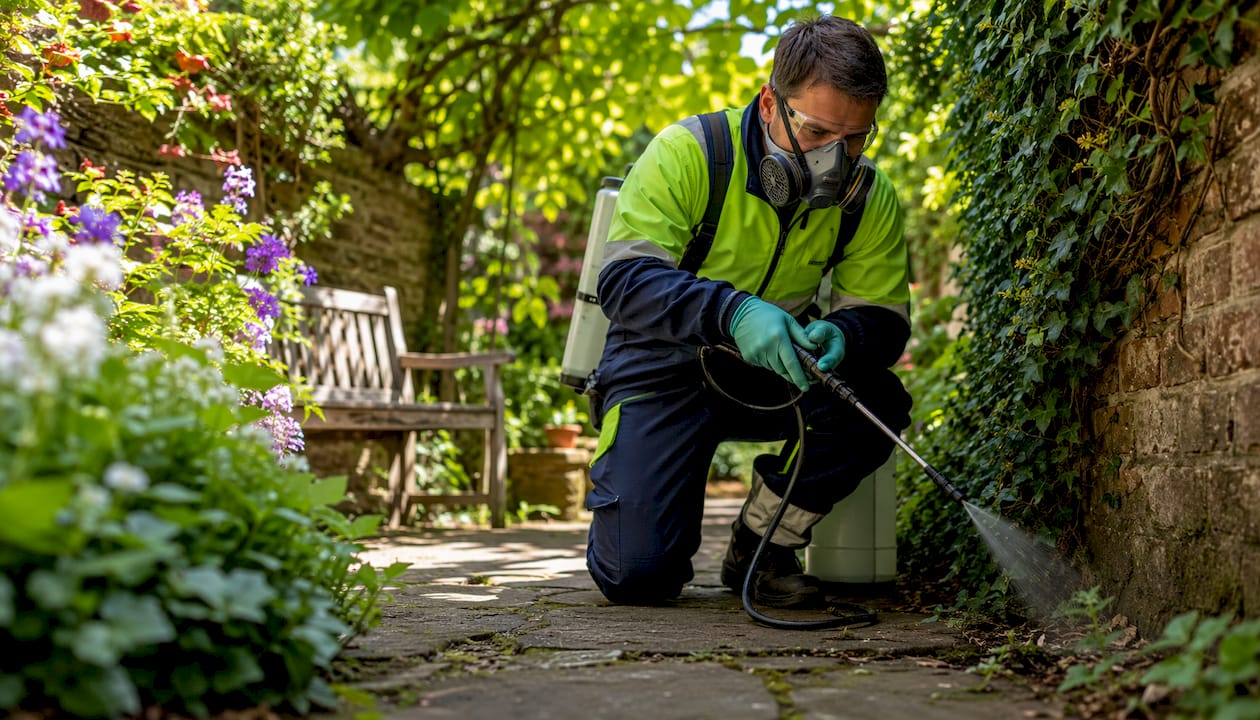
Residues, non-target impacts, and resistance development are the principal risks. Broad-spectrum products applied without regard for timing or placement can eliminate natural enemy populations, making subsequent pest pressure harder to manage. This is precisely why IPM frameworks specify chemical use as a last resort after thresholds are reached, not a default first response.
Biological vs chemical pest control: a side-by-side comparison
The table below compares the two approaches across the dimensions that matter most for practical decision-making. The narrative beneath each row explains what the difference means in real situations.
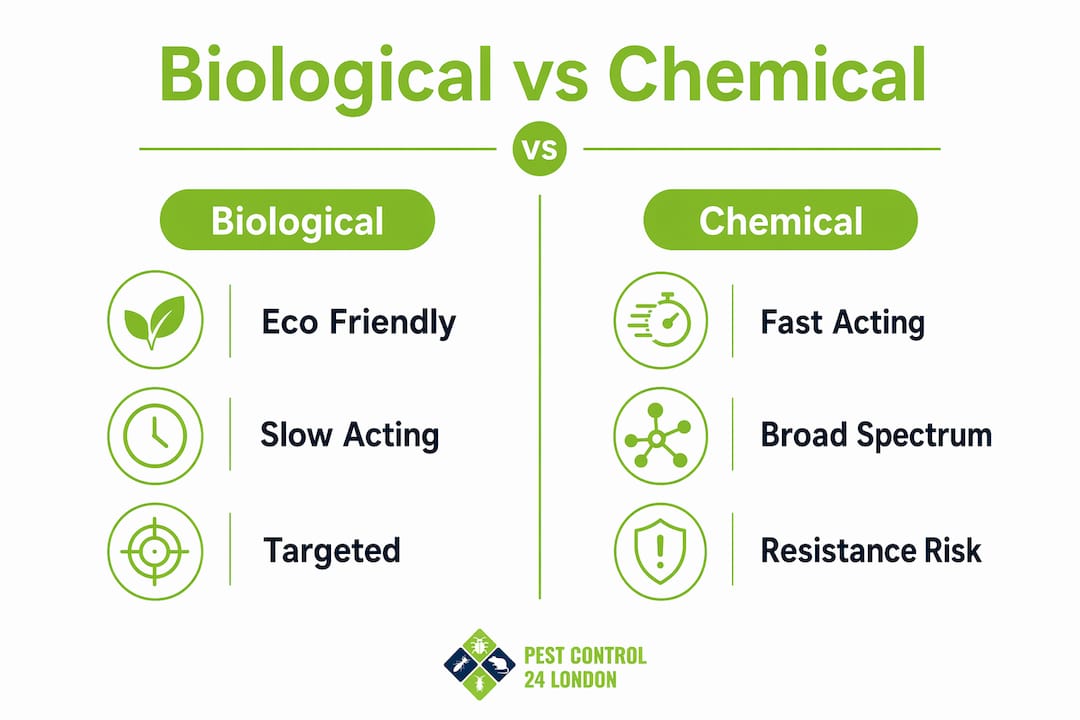
| Dimension | Biological control | Chemical control |
|---|---|---|
| Speed of action | Weeks to months (suppression) | Hours to days (knockdown) |
| Specificity | High (targets specific pest species or groups) | Variable (contact sprays broad-spectrum; baits more targeted) |
| Environmental impact | Low to moderate; agents decompose quickly | Moderate to high; residues persist depending on product class |
| Human and pet safety | Generally low risk when used correctly | Risk varies; label compliance and PPE are mandatory |
| Resistance development | Lower risk; multiple mechanisms of action | Significant risk with repeated use of same chemical class |
| Cost and labour | Higher upfront; lower long-term for established programmes | Lower per-treatment; higher long-term if resistance develops |
| UK regulatory status | Macrobials often unregulated; microbials need CRD approval | All products require HSE/CRD approval; professional use licensing applies |
| Home vs commercial suitability | Both; commercial greenhouses and gardens most established | Both; professional licensing required for many products |
What these differences mean in practice:
- A rat infestation in a London flat requires rapid chemical knockdown first. Biological measures (proofing, habitat management) then prevent reinfestation.
- An aphid outbreak in a greenhouse is well-suited to parasitoid release, with chemical intervention reserved for threshold breaches.
- For pet-safe pest control in domestic gardens, biological agents and targeted baits are preferable to broad-spectrum sprays.
- Property managers handling food businesses face stricter residue and re-entry interval obligations, making biological and targeted chemical options more attractive.
Homeowners should weight human and pet safety and resistance risk most heavily. Property managers in food or healthcare settings should prioritise specificity, regulatory compliance, and residue profiles.
Advantages and disadvantages of each approach
Biological control: the honest picture
Advantages:
- High specificity means non-target species, including pollinators and natural enemies, are largely unaffected.
- Residues are minimal; biopesticides decompose quickly, reducing environmental persistence.
- Resistance development is slower because biological agents often work through multiple mechanisms simultaneously.
- Established programmes can become self-sustaining, reducing long-term costs.
- Conservation measures (habitat strips, reduced mowing) cost little and deliver ongoing benefits.
Disadvantages:
- Slower action makes biological control unsuitable as a standalone response to acute infestations.
- Environmental sensitivity is a real constraint: temperature, humidity, and UV exposure affect agent survival. UK weather adds variability.
- Knowledge and labour requirements are higher. Correct species identification, release timing, and site preparation are all critical.
- Biological agents are not inherently risk-free. Resistance can develop, and non-target effects remain possible with poorly selected agents.
- Upfront costs for augmentative releases can be significant, particularly for inundative programmes.
Chemical control: where it excels and where it falls short
Advantages of chemical control include speed, predictability, and a lower per-treatment cost for acute problems. A single professional treatment can eliminate an active infestation before it spreads, which matters enormously in commercial food environments or rental properties where downtime is costly.
Disadvantages are well-documented. Repeated use of the same chemical class drives resistance development, which is now a documented problem with rodenticides (anticoagulant resistance in rats) and several insecticide classes used against bed bugs and cockroaches. Broad-spectrum products eliminate natural enemies alongside target pests, often triggering secondary pest outbreaks. Residues in food environments require careful management of re-entry intervals and pre-harvest intervals.
Pro Tip: When chemical treatment is necessary, choose the most selective product available for the target pest, apply it as a spot treatment rather than a blanket spray, and avoid applications during flowering or when beneficial insects are active. This preserves natural enemy populations and slows resistance.
A practical decision rule: if the infestation is acute and poses a health or structural risk, chemical control is the right starting point. If the problem is recurring or the setting is ecologically sensitive, biological measures and IPM should lead, with chemicals as a backstop.
How to combine both methods under Integrated Pest Management
IPM combining selective chemical use with biological methods is the industry standard for achieving efficacy while reducing chemical dependence. It is the framework recommended by HSE, DEFRA, and the BPCA, and it is the approach Pestcontrol24london applies across its London contracts.
IPM is not a single product or technique. It is a decision-making process:
- Monitor and set thresholds. Inspect regularly and record pest activity. Define the level at which action is economically or hygienically justified. Below the threshold, biological and cultural measures are sufficient.
- Identify accurately. Correct species identification determines which natural enemies are compatible and which chemical products are approved. Misidentification wastes money and can cause harm.
- Prioritise cultural and biological measures. Proofing, sanitation, habitat management, and biological agent releases address the root causes of infestation and reduce reliance on chemicals.
- Apply selective chemical interventions only when thresholds are reached. Choose the least disruptive product, apply it as a targeted spot treatment, and time it to minimise contact with natural enemies.
- Monitor and follow up. Record outcomes, adjust the plan, and maintain biological measures between treatments.
A concrete example: a recurring rat problem in a commercial kitchen. Step one is a chemical bait programme to achieve rapid knockdown. Simultaneously, a drain survey identifies entry points, which are sealed (proofing). Once the active population is eliminated, ongoing monitoring traps replace bait stations, and housekeeping protocols supported by good hygiene practices remove the food and harbourage that attracted rats in the first place. The result is a durable solution rather than a cycle of repeated chemical treatments.
Pro Tip: When integrating chemicals into an IPM plan, time applications to avoid the active periods of natural enemies. Granular or bait formulations generally pose less risk to beneficials than surface sprays. Always record application dates, products, and outcomes to track resistance trends over time.
For property managers wanting to evaluate a contractor’s IPM plan, look for: written monitoring records, defined action thresholds, evidence of non-chemical measures, product selection rationale, and scheduled follow-up visits. A contractor who cannot provide these is not delivering genuine IPM.
UK-specific practical considerations for homeowners and businesses
Timelines and seasonality
Biological measures operate on biological timescales. A nematode application against vine weevil grubs takes two to four weeks to show results. A parasitoid release in a greenhouse may take a full crop cycle to stabilise pest populations. Chemical knockdown, by contrast, is typically measurable within 24–72 hours. In the UK, temperature fluctuations affect both pest development and natural enemy performance, so biological programmes planned for spring may need adjustment if a cold snap delays pest emergence. Autumn is often the most reliable window for nematode applications in UK gardens, when soil moisture is adequate and temperatures are still above the minimum threshold.
Costs and labour
Augmentative biological releases carry higher upfront costs than a single chemical treatment, particularly for inundative programmes requiring repeated applications. However, established conservation programmes (habitat strips, reduced pesticide use) cost relatively little to maintain and deliver ongoing benefits. Chemical control appears cheaper per treatment but can become expensive when resistance develops and products must be rotated or escalated. Pest population management over the long term almost always favours an IPM approach on cost grounds.
Monitoring and thresholds
Homeowners can use sticky traps, pheromone monitors, and regular visual inspections to track pest pressure. A simple log of when and where pests are observed gives a professional far more to work with than a vague report of “seeing something occasionally.” For businesses, documented monitoring records are often a regulatory requirement under food safety legislation.
Regulatory pointers
- HSE/CRD: approves all pesticide products for use in the UK; the product label is a legal document.
- DEFRA: sets the broader policy framework for pesticide use and biopesticide registration.
- BPCA: the professional body for pest control in the UK; membership and qualifications signal competence and regulatory awareness.
- Many rodenticide and fumigant products are restricted to professional use only. Applying them without the appropriate qualification is a legal offence.
When to call a professional
Call a qualified pest control professional when: the pest poses a public-health risk (rats, cockroaches, bed bugs); the infestation persists after DIY measures; the pest is a protected species or a non-target species is at risk; a licensed product is required; or the property is a food business subject to regulatory inspection.
How licensed UK professionals apply biological and chemical methods
A qualified pest control professional does not arrive with a single product and apply it uniformly. The process begins with a thorough inspection: identifying the pest species, assessing the extent of the infestation, locating entry points and harbourage, and evaluating the site’s sensitivity (food preparation areas, presence of children or pets, proximity to water courses).
From that inspection, a tailored IPM plan is produced. It specifies which biological measures are appropriate, which chemical products are approved for the setting, what thresholds will trigger intervention, and when follow-up visits will occur. What to expect from a professional visit includes written documentation of findings, treatment records, and a clear explanation of what the client needs to do between visits.
Typical professional workflow:
- Species-level identification (critical for selecting compatible biological agents and approved chemical products).
- Threshold assessment: is the population at a level requiring immediate intervention, or can biological and cultural measures manage it?
- Tailored treatment plan: biological measures, proofing, and selective chemical use as required.
- Application with appropriate PPE and in compliance with label obligations.
- Follow-up monitoring and record keeping.
- Client briefing on housekeeping, proofing maintenance, and early warning signs.
Accurate species identification is not a formality. Using the wrong natural enemy, or releasing a biological agent without checking for hyperparasitoids, can result in complete programme failure. Professional identification is the single most important step in any biological control programme.
BPCA-qualified technicians hold recognised qualifications (typically the RSPH Level 2 Award in Pest Management or higher) and are trained in both chemical and biological methods. When evaluating a contractor, ask for evidence of BPCA membership and the qualifications held by the technician who will attend. Pestcontrol24london’s team is BPCA fully qualified, with over a decade of experience across London’s domestic and commercial sectors.
Key takeaways
Biological and chemical pest control are most effective when used together under a structured IPM framework, with chemical interventions reserved for threshold breaches and biological measures sustaining long-term suppression.
| Point | Details |
|---|---|
| IPM is the UK standard | HSE, DEFRA, and BPCA all recommend combining biological and chemical methods under a structured IPM framework. |
| Speed vs sustainability | Chemical control delivers rapid knockdown; biological control provides longer-term suppression with lower residue and resistance risk. |
| Biological agents have limits | Nematodes, parasitoids, and microbials are environment-sensitive; temperature, moisture, and timing all affect their success in UK conditions. |
| Resistance is a real risk | Repeated use of the same chemical class drives resistance; rotating products and integrating biological measures slows this process. |
| Pestcontrol24london applies IPM | BPCA-qualified technicians deliver tailored IPM plans for London homes and businesses, combining proofing, biological measures, and selective chemical use. |
Why the “biological is always safer” assumption gets professionals into trouble
There is a persistent belief that biological pest control is the cautious, responsible choice and chemical control is the reckless one. The reality is more nuanced, and professionals who have worked across both approaches know it.
Biological control done poorly can fail spectacularly. Releasing a natural enemy without confirming species identity, checking for hyperparasitoids, or preparing the release site properly is not a safe option; it is an expensive mistake. Similarly, assuming that a biopesticide carries no resistance risk is incorrect. Experts confirm that biological agents can face resistance and that misuse reduces efficacy just as it does with synthetic chemicals.
Chemical control, used selectively and timed correctly, can actually support biological programmes by eliminating a pest spike before it overwhelms natural enemy populations. The professionals who get the best long-term results are not ideologically committed to one approach. They treat biological and chemical tools as complementary, choosing between them based on the pest, the setting, the threshold, and the season.
The most durable pest control outcomes come from ongoing maintenance, not one-off treatments. Whether the initial response is biological or chemical, the follow-up monitoring and structural prevention work is what determines whether the problem returns. That is the part most clients underestimate, and the part that separates a genuine IPM programme from a repeat-visit cycle.
Pestcontrol24london: professional IPM for London homes and businesses
Dealing with a persistent infestation or trying to decide whether biological or chemical treatment is right for your property? Pestcontrol24london offers domestic pest control and commercial pest management across London, with BPCA-qualified technicians who apply genuine IPM: inspection, species identification, tailored treatment plans combining proofing, biological measures, and selective chemical use, and scheduled follow-up monitoring.

Every service visit includes written documentation, a clear explanation of findings, and practical guidance on prevention between treatments. For businesses, that documentation supports food safety and regulatory compliance. For homeowners, it means a plan that addresses the cause of the infestation, not just the symptoms. Emergency callouts are available 24/7. Contact Pestcontrol24london for a free quote and a treatment plan built around your specific pest problem.
Authoritative sources and further reading
The sources below are the most reliable references for UK readers seeking technical detail or regulatory guidance on biological and chemical pest control.
What are Biopesticides? (US EPA): The EPA’s primer on biochemical and microbial pesticides, covering registration requirements, modes of action, and environmental persistence. Useful for understanding how biopesticides differ from conventional synthetic products.
What is Biological Control? (Cornell Biocontrol Science): A thorough academic overview of conservation, classical, and augmentative strategies, with clear explanations of goals, constraints, and realistic outcomes. One of the most cited references in the field.
Approaches to the Biological Control of Insect Pests (Connecticut Agricultural Experiment Station): Detailed practitioner guidance on agent types, environmental constraints, pesticide selectivity, and IPM integration. Particularly useful for understanding nematode and parasitoid applications.
Biologically Based Methods for Pest Management under Changing Climates (PMC): Peer-reviewed research on how temperature variation affects pest and natural enemy populations, with direct relevance to UK seasonal planning.
Integrating Biologically Based Methods with Chemical Control (Frontiers in Sustainable Food Systems): The primary academic reference for IPM as the recommended integrated framework, with evidence on synergistic effects of combining biopesticides and biocontrol agents.
Misconceptions and Safe Use of Biological Control Agents (MDPI Toxics): A peer-reviewed corrective to the assumption that biological control is automatically safe; covers resistance risks and non-target effects.
Practical Cautions for Implementing Biocontrol (University of Missouri Extension): Practitioner-focused guidance on species identification, hyperparasitoid checks, and release synchronisation — the steps most often skipped by non-specialists.
Biological Pest Control Overview (Wikipedia): A useful starting point for readers new to the topic, with links to primary sources and case evidence on conservation biological control outcomes.