

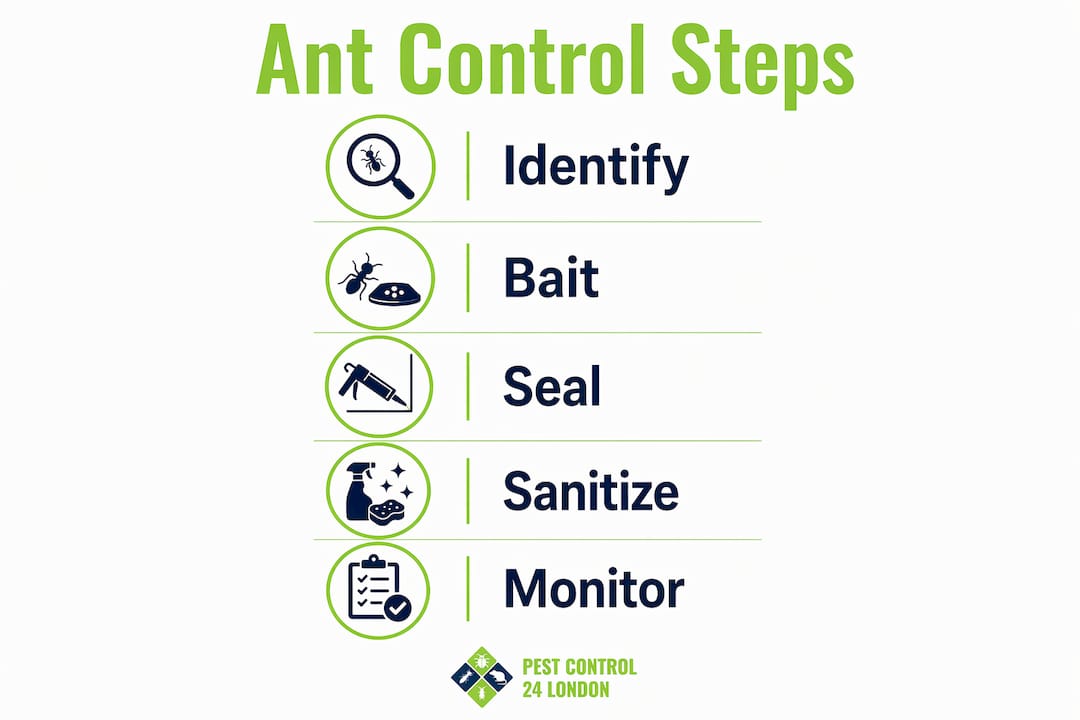
Effective ant infestation control targets the entire colony, not just the foraging workers you see crossing your kitchen worktop. The most reliable approach combines slow-acting bait stations, physical exclusion using silicone caulk and steel wool, and consistent sanitation to remove the attractants that draw ants indoors. Bait products such as borax-based mixtures or commercial gel baits work because foragers carry the toxicant back to the nest, where it spreads through the colony via trophallaxis. Visible ant activity typically stops within one to two weeks of correct bait placement. This guide covers every stage of the process, from identifying your ant species to sealing your home and knowing when to call a professional.
What is an ant infestation control guide and why does it matter?
An ant infestation control guide is a structured approach to eliminating ant colonies using baiting, exclusion, and sanitation in combination. Treating only the ants you can see is the single most common mistake homeowners make. Killing only visible ants risks triggering colony budding, where a stressed colony splits into multiple satellite nests and spreads further through your property. This means a poorly managed infestation can become significantly worse before it gets better.
The integrated pest management (IPM) approach, which is the recognised industry standard, treats ant control as a three-part system: reduce attractants, block entry points, and deliver a slow-acting toxicant to the colony. Each element supports the others. Baiting without sealing entry points allows new foragers to enter; sealing without baiting leaves an established colony intact underground.
How do ant baits work and why are they central to control?
Ant baits combine an attractive food source with a slow-acting poison, typically boric acid (borax) or a synthetic insecticide such as indoxacarb or fipronil. The slow action is deliberate. Forager ants consume the bait and carry it back to the nest, where it is shared with larvae, workers, and the queen through trophallaxis, a process of mouth-to-mouth food transfer. Visible ant activity stops after one to two weeks of consistent baiting when the colony has been sufficiently dosed. This timeline requires patience, but it is the only method that reliably eliminates the reproductive core of the colony.
Applying bait correctly makes the difference between success and failure:
- Place bait stations directly along active ant trails and near entry points such as door frames, window sills, and pipe penetrations.
- Use gel bait for indoor trails and granular bait for outdoor perimeter treatment.
- For sugar-feeding ants (black garden ants, pharaoh ants), mix one part borax with three parts icing sugar and a small amount of water to create a paste.
- For grease-feeding ants, mix borax with peanut butter or a small amount of cooking oil.
- Refresh bait every two to three days until activity ceases, as dried or contaminated bait loses its attractiveness.
Pro Tip: Never apply a contact insecticide spray near your bait stations. Repellent sprays near bait deter foragers from approaching the toxicant, which is one of the most common reasons DIY treatments fail entirely.
What sanitation and exclusion steps prevent and support ant control?
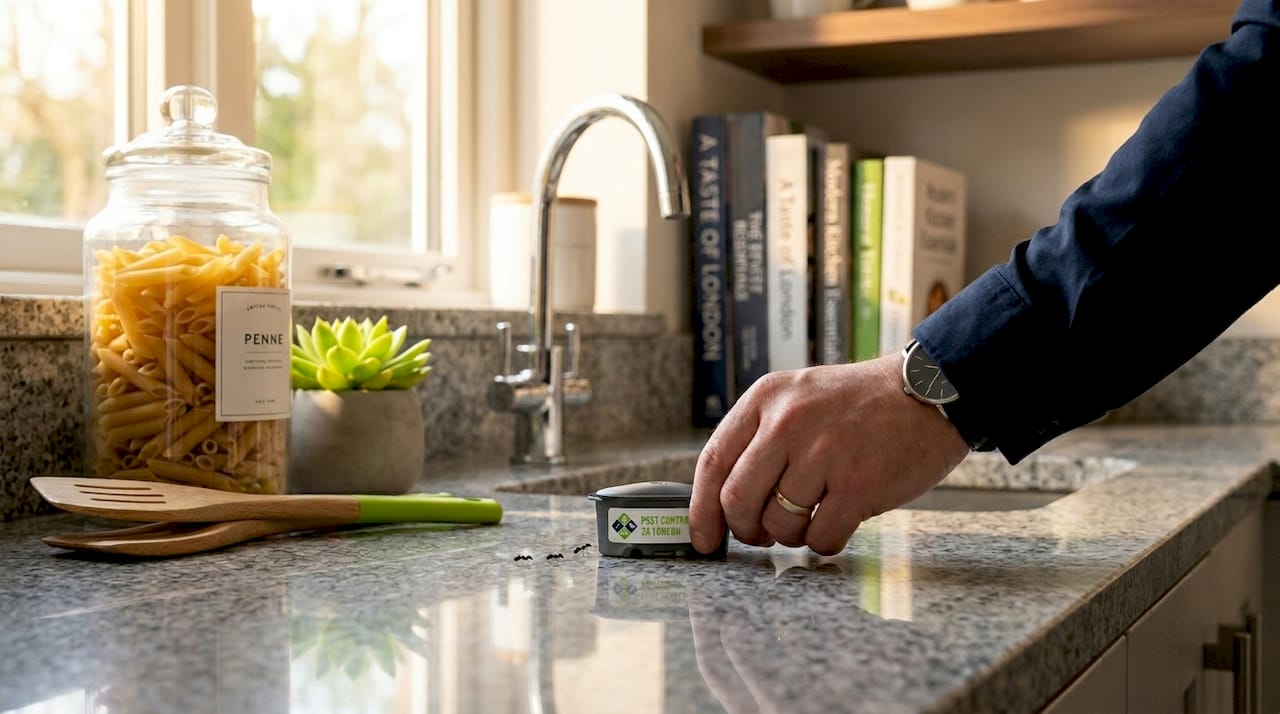
Sanitation removes the food and moisture signals that attract ants to your home in the first place. Even a small spill of fruit juice or a few crumbs behind the cooker is enough to establish a foraging trail. Wiping trails with warm soapy water after removing food disrupts the pheromone routes that guide other ants to the same spot. A diluted white vinegar solution achieves the same result and is safe for most kitchen surfaces.
Exclusion is the physical barrier that prevents re-entry once a colony is eliminated. Follow these steps in order:
- Inspect the full perimeter of your home at ground level, paying close attention to where pipes, cables, and conduits enter the building.
- Seal cracks larger than 6mm (approximately 1/4 inch) with silicone caulk. For gaps that ants or rodents could gnaw through, pack with steel wool first, then cap with silicone.
- Fit weatherstripping to the base of exterior doors and check that window frames are fully sealed.
- Fix any dripping taps, leaking pipes, or areas of poor drainage near the foundation. Moisture control around foundations significantly reduces ant nesting opportunities, as many species prefer damp soil for colony establishment.
- Clear vegetation, mulch, and leaf litter from within 30cm of the building’s exterior walls, as these create sheltered nesting sites directly adjacent to your home.
Pro Tip: Multi-material sealing using steel wool packed into larger gaps and then capped with silicone is far more durable than silicone alone, particularly in older London properties where brickwork and timber frames have settled over decades.
How to identify ant species and when to seek professional help
Species identification determines which bait formulation and treatment strategy will work. The black garden ant (Lasius niger) is the most common UK species and responds well to sugar-based borax baits. Pharaoh ants (Monomorium pharaonis) are a tropical species found in heated buildings such as hospitals and blocks of flats; they are grease feeders and notoriously difficult to control because they bud aggressively when disturbed. Carpenter ants (Camponotus species) do not eat wood but excavate it for nesting, causing structural damage similar to that of woodworm.
Species identification is crucial because applying the wrong bait type or using a repellent treatment on a pharaoh ant colony will cause it to split and spread. The signs that you need professional assistance include:
- Persistent trails returning within days of treatment, suggesting a large or well-established colony.
- Ants appearing in multiple rooms simultaneously, which may indicate pharaoh ant budding.
- Sawdust-like frass near timber joists, skirting boards, or roof spaces, which points to carpenter ant activity.
- Any suspicion of fire ants (Solenopsis invicta), which are an invasive species occasionally intercepted in UK ports and garden centres.
A BPCA-qualified pest controller will carry out a species-specific inspection, identify nesting sites that are not visible to the homeowner, and apply targeted treatments with appropriate follow-up visits. The cost of professional treatment is modest compared with the structural damage that carpenter ants or a mismanaged pharaoh ant infestation can cause. You can read more about residential pest control approaches to understand what a professional service involves before booking.
What methods work best for outdoor ant control?
Outdoor ant control differs from indoor treatment primarily in scale and environmental sensitivity. For garden ant colonies, granular bait applied around mound perimeters and along foraging trails is the most effective method. Broadcast bait applications once or twice yearly can suppress fire ant populations by approximately 90% when applied correctly. That figure underlines why broadcast baiting outperforms individual mound treatments for large outdoor areas.
| Method | Best use | Key limitation |
|---|---|---|
| Granular broadcast bait | Large garden areas, multiple colonies | Requires dry weather for uptake |
| Individual mound treatment | Isolated colonies, targeted control | Labour-intensive for large infestations |
| Contact spray perimeter | Immediate knockdown near entry points | Does not reach queen; avoid near bait stations |
| Hot water drench | Single mound, no chemicals available | Low success rate; risks scalding plants |
Timing bait applications correctly is critical outdoors. Bait should not be applied near rain or dew, as moisture degrades the attractant and reduces uptake. Apply granular bait in dry conditions when soil temperatures are warm enough for active foraging, typically on a dry afternoon in late spring or summer in the UK.
Key takeaways
Effective ant control requires targeting the colony with slow-acting baits, sealing all entry points with silicone and steel wool, and removing food and moisture sources that sustain foraging activity.
| Point | Details |
|---|---|
| Target the colony, not the trail | Slow-acting baits reach the queen via trophallaxis, eliminating the colony within one to two weeks. |
| Never spray near bait stations | Contact insecticides repel foragers away from bait, causing DIY treatments to fail. |
| Seal gaps with multiple materials | Pack large gaps with steel wool, then cap with silicone caulk for durable exclusion. |
| Identify species before treating | Pharaoh ants bud when disturbed; using the wrong treatment worsens the infestation. |
| Control moisture around the foundation | Damp soil near the building perimeter creates prime nesting conditions for multiple ant species. |
Why patience is the most underrated part of ant control
I have seen hundreds of ant jobs in London properties over the past decade, and the pattern is almost always the same. A homeowner spots a trail, reaches for a can of spray, kills the visible ants, and feels the problem is solved. Three days later, the trail is back, often in a different room. The spray has scattered the colony without touching the queen.
The hardest thing to communicate to clients is that doing less, placing bait and leaving it alone, produces better results than aggressive intervention. Bait works precisely because it looks harmless to the colony. The moment you introduce a repellent chemical nearby, foragers avoid the area entirely and the bait sits untouched.
What I have found genuinely works is a two-week commitment: bait placed correctly, trails wiped with soapy water rather than sprayed, and entry points sealed at the same time. Most garden ant infestations resolve within that window. Pharaoh ants and carpenter ants are a different matter entirely. If you are seeing ants in a heated building year-round, or finding frass near timber, call a professional before attempting any DIY treatment. The risk of making the problem significantly worse is real, and the cost of structural repairs far exceeds the cost of a professional inspection. For broader pest prevention habits that reduce the likelihood of any infestation taking hold, building a routine around sealing and sanitation is the most reliable long-term strategy.
— Dan
How Pestcontrol24london can help with your ant problem
If your ant infestation persists beyond two weeks of baiting, or if you suspect pharaoh ants or carpenter ants, professional treatment is the most reliable next step.

Pestcontrol24london has been providing BPCA-qualified pest control across London since 2015, working with residential properties, hotels, restaurants, and commercial premises. The team carries out species-specific inspections to identify the colony source, applies targeted treatments that reach the queen, and provides follow-up visits to confirm the infestation is fully resolved. For persistent or complex ant problems, visit Pestcontrol24london for a free quote, or explore the dedicated ant removal service for full details on treatment options available across London.
FAQ
How long does ant bait take to work?
Ant bait typically reduces visible activity within one to two weeks. The slow-acting toxicant must be carried back to the nest and shared with the queen before the colony collapses.
Why do ants keep coming back after treatment?
Ants return when entry points remain unsealed or when food and moisture sources are still present. Sealing gaps with silicone caulk and removing attractants prevents re-entry after baiting.
Can I use natural ant control solutions at home?
A borax and sugar paste is an effective natural bait for sugar-feeding ants such as the black garden ant. Wiping trails with white vinegar or warm soapy water disrupts pheromone routes without introducing chemicals indoors.
When should I call a professional pest controller?
Call a professional if trails return within days of treatment, if ants appear in multiple rooms simultaneously, or if you find sawdust-like frass near timber, which suggests carpenter ant activity.
Are ant infestations dangerous?
Most UK ant species are a nuisance rather than a direct health risk. Pharaoh ants are an exception, as they are associated with contamination in food preparation and healthcare environments and require specialist treatment to control safely.