

Fitted correctly, stainless-steel or purpose-made air brick covers will stop mice entering through air bricks in most cases. The mesh has to be fine enough to exclude a mouse’s body, the frame has to fit the opening snugly, and the vent must not be feeding a gas appliance.
That last point matters more than any product spec. A cover fitted to the wrong vent can trap debris against a flue outlet and raise the risk of carbon monoxide building up indoors.
What to do right now:
- Measure your air brick’s width and height before buying anything.
- Choose a stainless-steel mesh cover rated for airflow, not a solid or painted-over one.
- Check whether the vent serves a boiler, gas fire, or other combustion appliance before you fit anything.
- Call a pest control professional if you’re unsure, or if mice are already inside.
Key Takeaways
Air brick covers stop mice reliably when the mesh excludes rodent-sized gaps and the vent doesn’t serve a gas appliance.
| Point | Details |
|---|---|
| Check before you cover | Confirm a vent doesn’t serve a gas appliance before fitting any mesh cover. |
| Match mesh to the pest | A 2mm woven stainless-steel mesh excludes mice while maintaining airflow. |
| Measure your exact opening | Standard widths run 245–260mm with heights near 95mm, 170–185mm, or 245–255mm. |
| Repair before you proof | Fix cracked or crumbling brickwork first; a cover over damage leaves gaps. |
| Call in the experts when unsure | Pestcontrol24london’s BPCA-qualified team surveys vents and fits compliant, bespoke covers. |
Table of Contents
- How air brick covers stop mice getting in
- Which material and size do you actually need?
- Choosing the right cover: a five-point checklist
- Fitting an air brick cover without making it worse
- Why some vents must never be covered
- When is it time to call a professional instead?
- Why the safety rule matters more than the product spec
- Sources
How air brick covers stop mice getting in
Mice can squeeze through gaps roughly the width of a pencil, so the mesh aperture on a cover has to be small enough to physically block that. Most UK proofing products use a 2mm woven stainless-steel mesh, which is fine enough to exclude pests with an abdomen of 4mm or larger while still letting air pass through. That’s the working principle: small enough to stop the animal, open enough to keep the brick doing its job.
Where the air brick itself is cracked, crumbling, or missing sections of mortar, a cover fitted over the damage is only a partial fix. Repair the brickwork first, then fit the cover. Mice are opportunists, and a cover with a gap at one corner because the surrounding masonry has crumbled away defeats the purpose entirely.
Air bricks are rarely the only route in. Before you spend money proofing every vent in the house, check these too:
- Gaps around pipework, cables, or utility penetrations through external walls.
- Loose or missing airbrick grilles left as bare holes.
- Broken pointing or mortar joints, especially near ground level.
- Gaps under doors and around ill-fitting drainage or waste pipes.
Our mice prevention checklist for homeowners covers the wider exclusion picture if air bricks are just one part of a bigger problem.
Which material and size do you actually need?
Three materials dominate the UK market, and the differences aren’t cosmetic. Stainless steel mesh is the standard recommendation for rodent proofing: it resists corrosion, won’t rust and weaken over years outdoors, and holds its shape under a determined mouse gnawing at the edges. Galvanised metal covers are a cheaper alternative but degrade faster in damp coastal or exposed sites. Plastic-framed covers with stainless mesh sit in between, combining a lightweight, often UV-stabilised frame with a metal mesh doing the actual pest-exclusion work.
Sizing follows the brickwork itself, since air bricks are built to standard masonry courses. Widths typically run 245–260mm, and heights fall into three common bands matching one, two, or three brick courses:
- Single-course (~95mm high): the smallest and most common domestic size.
- Double-course (~170–185mm high): used for larger vents, particularly under floors.
- Triple-course (~245–255mm high): found on bigger sub-floor or plant-room vents.
Sizing snapshot: UK suppliers commonly sell standard widths around 245–260mm with heights in bands near 95mm, 170–185mm, and 245–255mm. Single units typically start around £7.79, with multipacks working out cheaper per vent if you’re proofing several at once.
Some brands map their exact ranges to these brick heights, for example listing small, medium and large sizes at 245mm, 170mm and 245mm high respectively. Measure your own vent before ordering. A cover that’s a few millimetres too small will leave a gap around the frame that a mouse will find within days.
Prices vary depending on material and finish, though buying a multipack generally offers better value if your property has several air bricks needing the same treatment.
Choosing the right cover: a five-point checklist
Getting the right cover comes down to five decisions, and skipping any one of them tends to be why a cheap fix fails.
- Measure twice, from both sides if you can. Air bricks can taper slightly through the wall, so measure the visible external opening and, where accessible, the internal reveal too. Round up rather than down if the numbers don’t quite match a standard size.
- Default to stainless steel unless there’s a reason not to. It costs a little more than galvanised metal but lasts years longer outdoors, particularly on north-facing or coastal walls where moisture sits longer.
- Decide your fixing method before you buy. Screw-fixed covers are more secure for long-term, high-risk properties. Adhesive fixing gives a neater finish on brickwork you don’t want to drill.
- Check the wall surface. Render, painted brick, and bare masonry all take adhesive differently, and a poor bond on a rough surface is a common reason covers come loose within a season.
- Pick a frame colour that won’t stand out. Several UK suppliers offer brown, black, white, or brick-red frames that blend with the surrounding brickwork rather than looking like an obvious retrofit.
Pro Tip: Take a photo of the air brick with a tape measure held against it before you go shopping. It’s the easiest way to double check sizing later without a second trip up a ladder.
Fitting an air brick cover without making it worse
Two fitting methods cover almost every domestic job: screws or adhesive. Both are within reach of a confident DIYer with basic tools, but each has its own failure points.
Screw-fixed installation:
- Offer the cover up to the opening and mark the fixing holes.
- Drill pilot holes into sound mortar or brick, not into the vent void itself.
- Insert wall plugs suited to the masonry type.
- Screw the frame flush against the wall, checking it sits square.
- Run a bead of exterior sealant around the frame edge to close any hairline gaps.
Adhesive installation:
- Clean the wall surface thoroughly, removing dust, moss, or flaking paint.
- Apply a strong construction adhesive such as FixAll into the frame’s fixing channel, where fitted; some UK-made covers include a Glue Groove designed for exactly this.
- Press the cover firmly against the wall and hold for the manufacturer’s recommended time.
- Leave undisturbed for the full cure period before considering the job finished.
Before starting either method, gather masonry drill bits, wall plugs, a suitable adhesive, a spirit level, and exterior sealant.
The three mistakes that undo good intentions: fitting a cover but leaving a gap unsealed around the frame edge, fitting mesh to a vent that turns out to serve a boiler or gas fire, and never checking what’s actually behind the air brick before covering it over. A cavity with an existing mouse nest doesn’t improve because you’ve sealed the entrance.
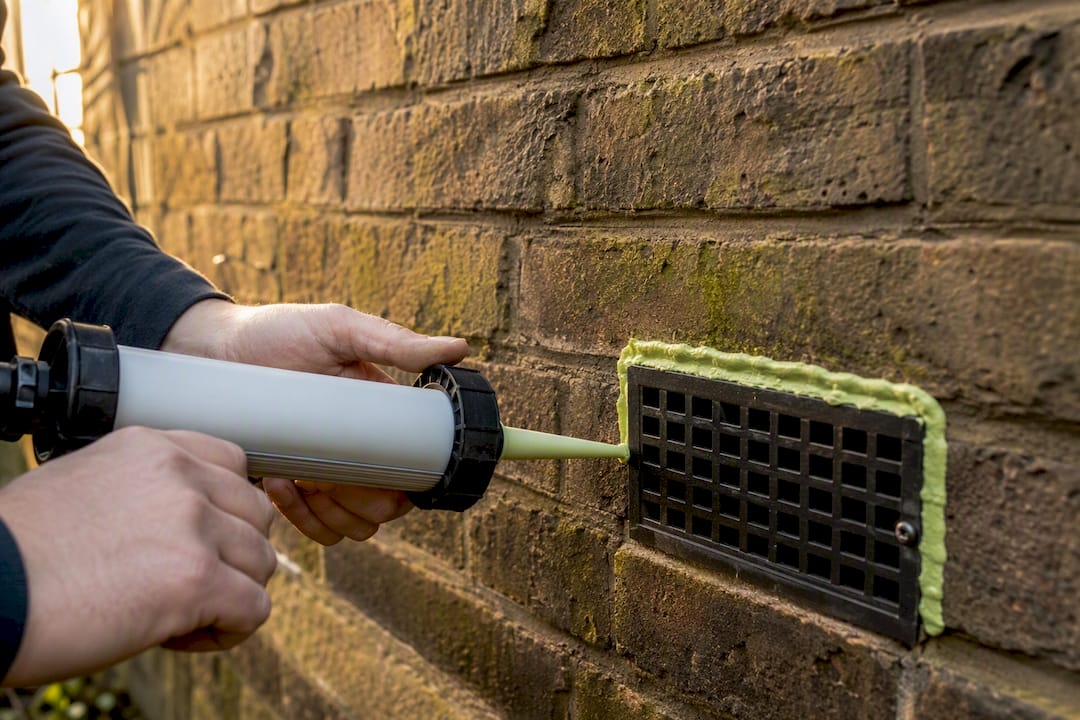
Pro Tip: If you’re not certain what a vent serves, don’t guess. A five-minute check now is far cheaper than an emergency call-out later.
Why some vents must never be covered
This is the one rule that overrides everything else in this guide: never fit a mesh cover to a vent that ventilates a gas appliance. Manufacturers are explicit about this, warning that debris accumulating on fine mesh can restrict airflow over time and increase the risk of carbon monoxide poisoning. A blocked flue vent doesn’t announce itself. Carbon monoxide is odourless, and reduced airflow can build up gradually rather than causing an obvious, sudden fault.
Before fitting anything, check what each vent actually serves:
- Trace the vent back inside if you can, following it to see whether it connects to a boiler cupboard, gas fire, or flue.
- Look for a manufacturer’s plate or appliance nearby that references ventilation requirements.
- If there’s any doubt, ask a Gas Safe registered engineer to confirm before you touch it.
Where a vent must stay clear for combustion safety but you’re still worried about mice, the answer isn’t to skip proofing altogether. Removable covers that a Gas Safe engineer can take off during servicing, or a bespoke solution from a pest control professional that preserves the required airflow, both keep you compliant without leaving the property exposed. Our guide to rodent proofing and ventilation trade-offs goes into this balance in more detail, and the same logic applies to timber buildings, where ventilation and structural safety are equally intertwined.
When is it time to call a professional instead?
Some situations are worth handing to a BPCA-qualified pest controller rather than tackling with a retail cover and a drill. Confirmed mice activity, such as droppings, gnaw marks, or scratching in the walls, calls for a proper inspection before you seal anything, because covering the entry point without checking what’s already inside just traps the problem. Vents that might serve a gas appliance need a professional check regardless. Commercial premises, and any property with repeated breaches after a DIY fix, usually point to an underlying issue a retail cover won’t solve alone.
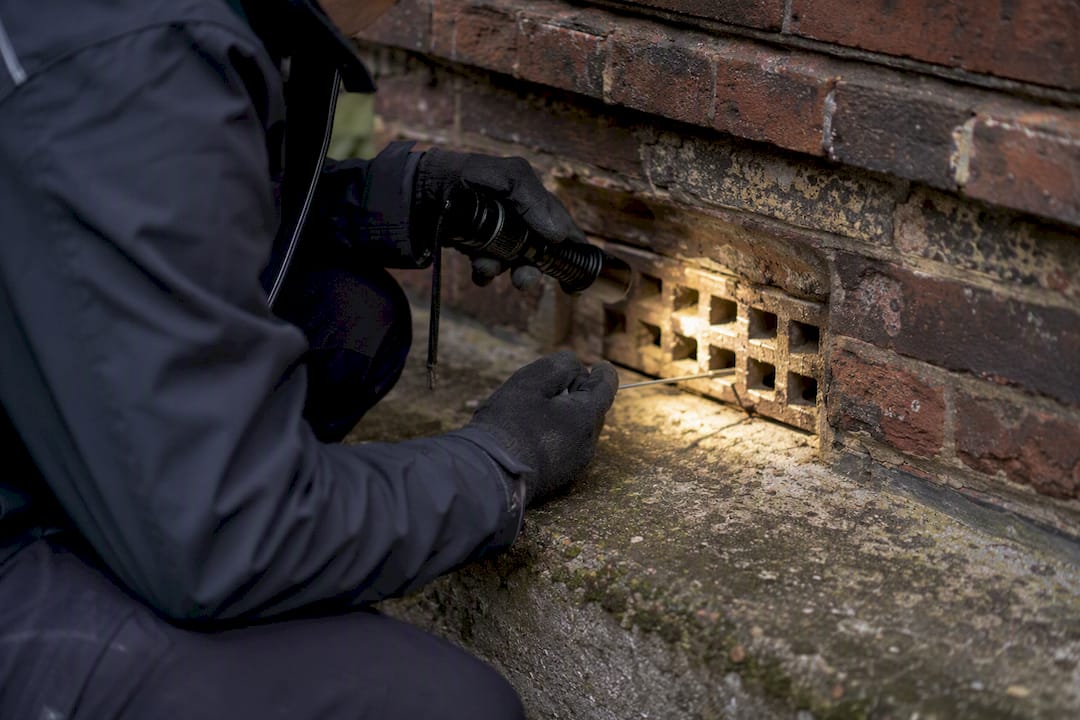
A professional visit typically includes a full inspection of the property’s exterior, checks inside accessible cavities, and either bespoke stainless-steel fabrication for awkward or non-standard openings or permanent fixings designed to outlast a retail-grade product. You’ll also get practical maintenance advice for keeping covers clear of debris.
Pestcontrol24london has operated across London since 2015, holds full BPCA qualification, and works with everything from single homes to hotels and commercial kitchens, offering 24/7 availability for genuine emergencies. If you’ve already dealt with an infestation and want to stop it recurring, our guide on dealing with mice infestation in your home is a useful next read.
Pro Tip: If a DIY cover has failed twice on the same vent, that’s usually a sign of a structural gap elsewhere, not a faulty product.
Why the safety rule matters more than the product spec
Most advice on air brick covers for mice focuses on mesh size and material, and that’s the easy part to get right. Any decent stainless-steel product with a 2mm aperture will do the exclusion job it’s designed for. Where homeowners actually come unstuck is skipping the fifteen minutes it takes to work out what a vent is for before reaching for the drill.
Conventional DIY advice tends to treat every air brick as interchangeable. It isn’t. A vent under a suspended floor and a vent feeding a boiler flue look nearly identical from outside, and only one of them is safe to seal with fine mesh without professional input. That distinction rarely gets the attention the mesh spec gets, despite carrying far higher stakes.
If there’s one thing worth prioritising above material choice or frame colour, it’s tracing every vent back to its purpose before buying anything. Get that right first, then worry about stainless steel versus galvanised, adhesive versus screws, and which colour blends into your brickwork. Get it wrong, and the neatest-looking installation in the street is also the riskiest.
— Dan
Professional proofing from Pestcontrol24london
If measuring, drilling, and second-guessing gas flues isn’t how you want to spend a Saturday, a professional survey solves that in one visit. Pestcontrol24london’s BPCA-qualified technicians inspect every vent on your property, confirm what each one serves, and fit bespoke stainless-steel covers or permanent fixings designed to outlast anything off a shelf.

Booking a survey means you get a full exterior inspection, a clear quote before any work starts, and an installation that’s compliant with gas-safety requirements from the outset, not a retrofit you’re hoping is fine. That’s particularly worth it for commercial premises, older properties with multiple vents, or anywhere a previous DIY fix hasn’t held. Request a free quote or inspection and get every air brick on your property checked and proofed properly, the first time.
Sources
- AirBrickCovers product and sizing overview
- MouseMesh original stainless-steel air brick cover product listing (DIY)
- MouseMesh product safety and installation guidance
- Flyscreen — Vermiguard vent mesh product page